

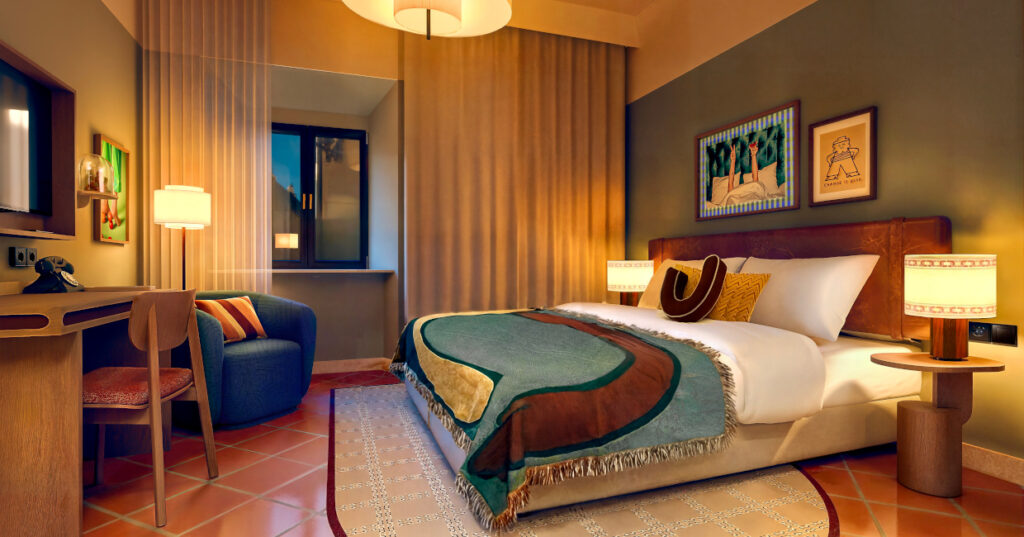

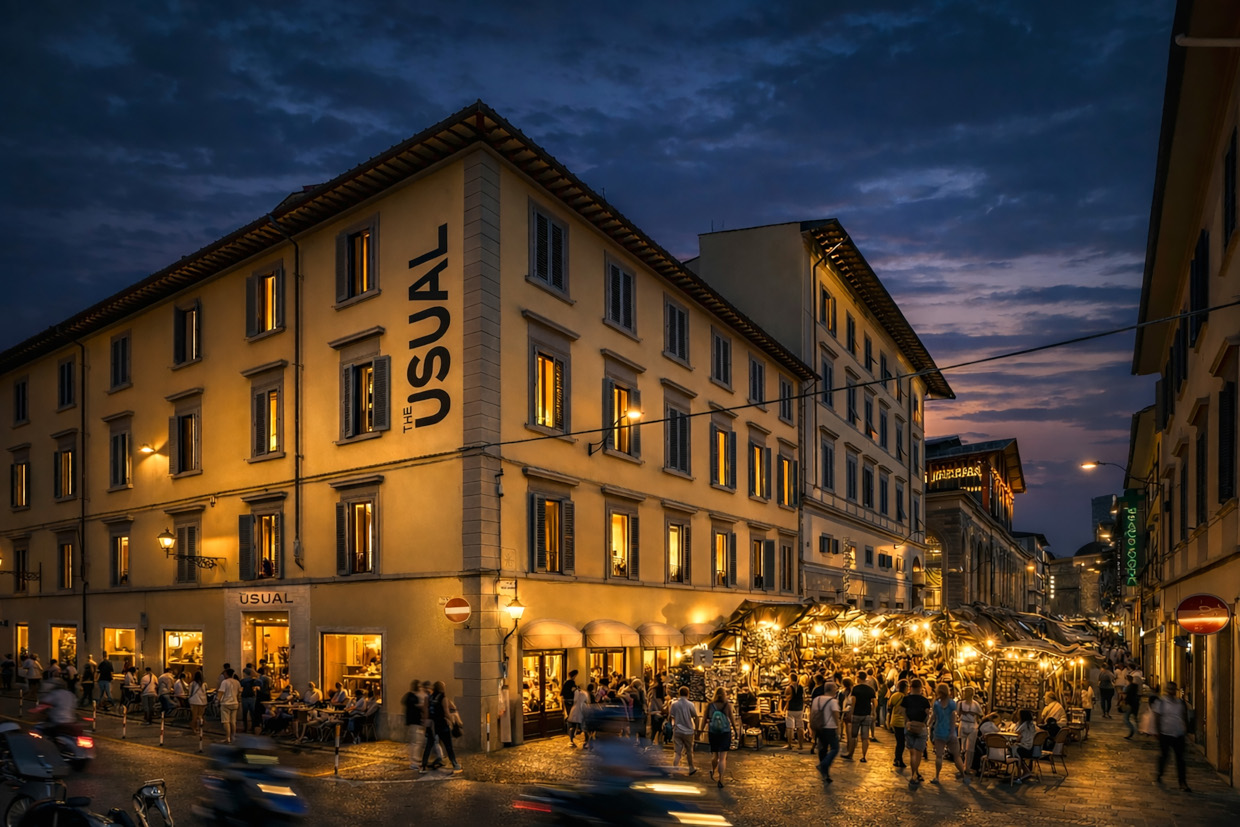
The Usual Florence brings a fresh design-led approach to hospitality in one of Italy’s most historic cities. Developed by lifestyle hotel brand The Usual and designed in collaboration with concept and design agency Stylt, the hotel blends Florence’s creative heritage with contemporary interiors shaped around community, flexibility, and sustainability.
Rather than acting as a traditional hotel, The Usual Florence is designed as a series of shared spaces that encourage interaction between guests and locals. Central to the layout are The Atelier, The Makers Studio, and Creator Box—multi-purpose areas intended for workshops, exhibitions, co-working, and events. These spaces are open, adaptable, and informal, allowing the interiors to shift throughout the day depending on how they are used.
 Stylt’s design approach draws on Florence’s long tradition of craftsmanship while keeping the look modern and accessible. Materials, finishes, and detailing reference local artistry without becoming overly decorative. The result is an interior scheme that feels grounded in place but contemporary in execution, balancing character with functionality.
The project also reflects Stylt founder and Creative Director Erik Nissen Johansen’s personal connection to the city, where he studied art early in his career. “Florence is synonymous with the Renaissance,” says Johansen “The Usual is a renaissance of its own—this project feels like coming full circle. I studied art here in the ’80s, and Florence inspired me to start Stylt as an art collective. Now, as a creative force in hospitality, we’re giving something back to the city that started it all.”
Sustainability plays a key role in the design decisions. The interiors use ethically sourced materials and work closely with local artisans and suppliers. This extends into the hotel’s food and beverage concept, which prioritises local, organic produce and low-waste operations. These choices are integrated into the overall design rather than presented as separate initiatives.
According to Aniek Holland, Brand Director at The Usual, the aim was to create an inclusive environment where design supports connection. “The spaces are made to be used, shared, and shaped by the people in them,” she explains.
The Usual Florence offers a clear example of how contemporary hospitality design is shifting away from formality. Instead, it focuses on flexible interiors, strong local references, and sustainable choices—creating a hotel that feels relevant to both today’s travellers and the city it sits within.