

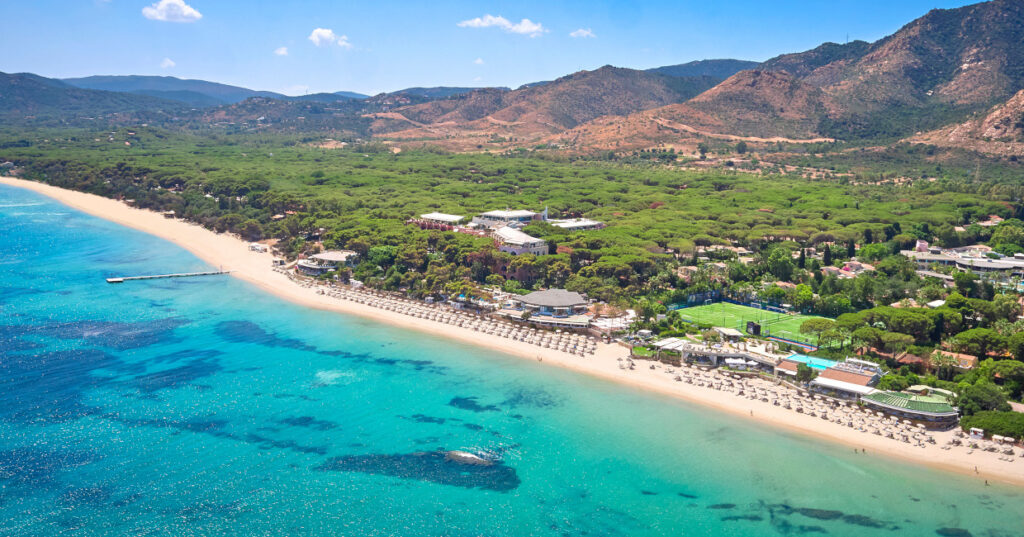

When Forte Village reopens for the 2026 season in late March, the story is one of careful refinement rather than dramatic reinvention. Set on Sardinia’s south-eastern coast, the resort – comprising eight hotels, 13 villas and 40 suites – has used the winter months to reconsider how design can better express its setting. The result is a series of measured updates that place materiality, light and landscape firmly at the centre of the guest experience.
Across the property, the emphasis is on clarity and cohesion. At Hotel Castello Garden, the bungalows have been refurbished with brighter interiors and upgraded lighting. The shift is subtle but effective. Lighter palettes allow natural daylight to travel further into the rooms, while new fittings bring a softer, more contemporary tone to the spaces. Furnishings and textiles have been refreshed, creating interiors that feel considered rather than decorated.
Bathrooms have received particular attention. Ceramic tiles by Cerasarda introduce colours drawn from the sea, reinforcing the connection between inside and out. In selected rooms, new bathtubs act as sculptural focal points, turning a functional space into one that feels quietly indulgent. In the north wing of Hotel Castello, selected rooms have also been updated with improved finishes and lighting. Showers clad in Biancone di Orosei stone add a distinctly Sardinian texture, grounding the modern detailing in local material heritage.
At Hotel Bouganville, newly designed bungalows are intended to give families a greater sense of privacy without losing proximity to the resort’s facilities. Each opens on to a patio and garden, allowing the landscape to extend the living space. The design approach is straightforward: remove barriers, open the threshold and allow air and light to do the rest. It is a reminder that in resort architecture, the most effective gesture is often the simplest one.
The reimagining of Piazza Luisa marks a larger-scale intervention. The square has been redesigned with a new layout that sets the scene for live performances beneath the Sardinian sky. New stone paving provides a calmer visual base, while updated landscaping introduces softness and rhythm. Lighting has been reconsidered to support both daytime use and evening events. Surrounding façades have been refreshed in earthy tones, chosen to complement the natural palette of the island. The overall effect is cohesive and assured. The piazza feels less like a thoroughfare and more like an outdoor room.
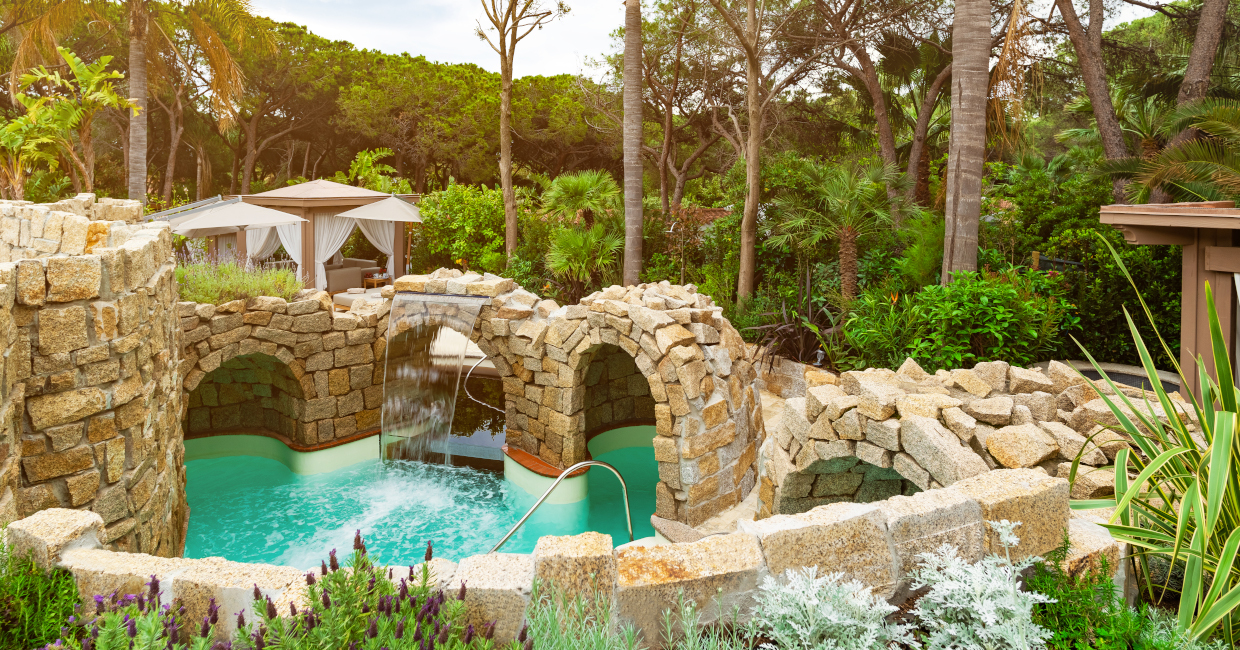 Wellbeing remains central to the resort’s identity, and design plays a supporting role. At Acquaforte Thalasso & Spa, enhancements for 2026 include a new Russian Banya and an expanded mud therapy area. These additions are conceived to complement the established Thalasso circuit rather than compete with it. Spatially, they extend the narrative of heat, water and mineral immersion that defines the spa experience.
The resort also points to research conducted by the University of Cagliari and the Polytechnic University of Turin, which confirms physiological benefits associated with immersion in seawater enriched with magnesium chloride, the signature element of the Acquaforte Thalasso pools. The science is presented as reassurance rather than spectacle. In design terms, it reinforces the idea that the architecture of the spa is not simply aesthetic; it is structured around a specific therapeutic purpose.
Nature continues to shape the wider masterplan. The resort’s Nature Park offers younger guests space to explore, while new hiking routes draw attention to the coastline’s dramatic contours. These initiatives extend the design conversation beyond buildings, suggesting that paths, views and planted areas are as important as walls and roofs.
A new observatory above Santa Margherita di Pula adds another dimension. Intended for stargazing, it invites guests to engage with the night sky in a deliberate way. As a design gesture, it is both modest and evocative: a reminder that darkness, when properly framed, can be as powerful as light.
Sport also influences the spatial identity of the resort. The return of the ITF Tournaments in spring and autumn, along with the Challenge Forte Village Sardinia triathlon in October, places the courts and surrounding infrastructure in focus. While primarily sporting events, they underscore the importance of planning, circulation and spectator space within the broader design framework.
For those wishing to venture beyond the resort, a new Cagliari Dining Experience connects guests with Palazzo Doglio in the city of Cagliari. The package includes an à la carte dinner at Osteria del Forte and a return transfer service. Although primarily gastronomic, the initiative reflects a wider design thinking: the guest journey is curated from room to restaurant, from coast to city.
With 27 restaurants open during the summer season, dining remains a significant component of the resort’s identity. Established venues, including those led by Carlo Cracco and Rocco Iannone, continue to shape the culinary offer alongside La Riviera’s Mediterranean flavours. While new collaborations are yet to be announced, the existing line-up suggests continuity rather than disruption.
Taken together, the 2026 updates at Forte Village demonstrate a clear approach. Materials are local where possible, colours echo the landscape, and lighting is used to shape atmosphere rather than draw attention to itself. The interventions are confident but restrained. In hospitality design, such restraint can be the most luxurious quality of all.