

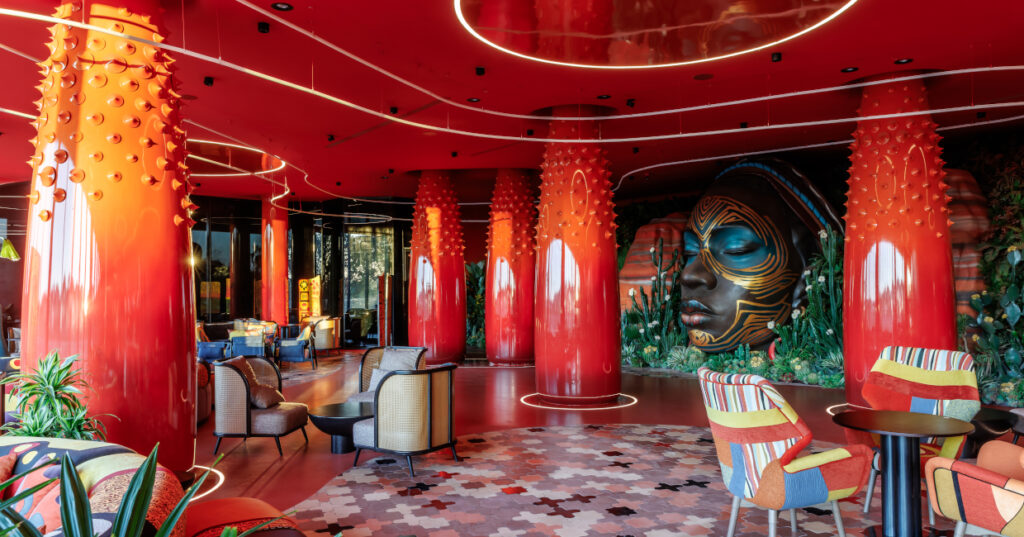

Designer Svetlana Andreeva-Shchepeteva, Founder and Creative Director of M.A.D. Interiors, has transformed the concrete columns of Krasnodar Park into a retro-futuristic African oasis.
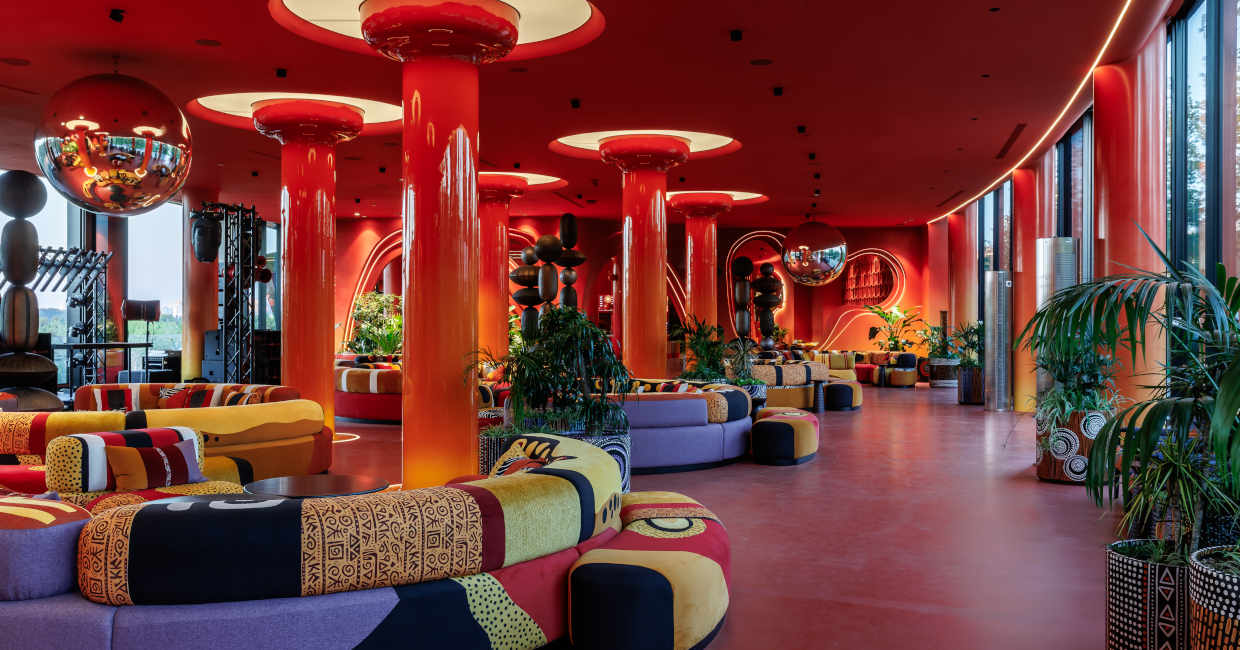
The public space is located on the second floor of a building above the Canyon waterfall fountain in Krasnodar Park. Spanning more than 2,000 m², the semi-circular space surrounds the fountain’s crater and serves as a vast viewing platform overlooking the park.
Stylist: Yulia Chebotar
The building’s architecture was already in place: irregularly arranged concrete columns seemed to grow out of the landscape. This became the starting point for the concept — transforming the space into a fantastical forest where architecture feels like an extension of the natural surroundings.
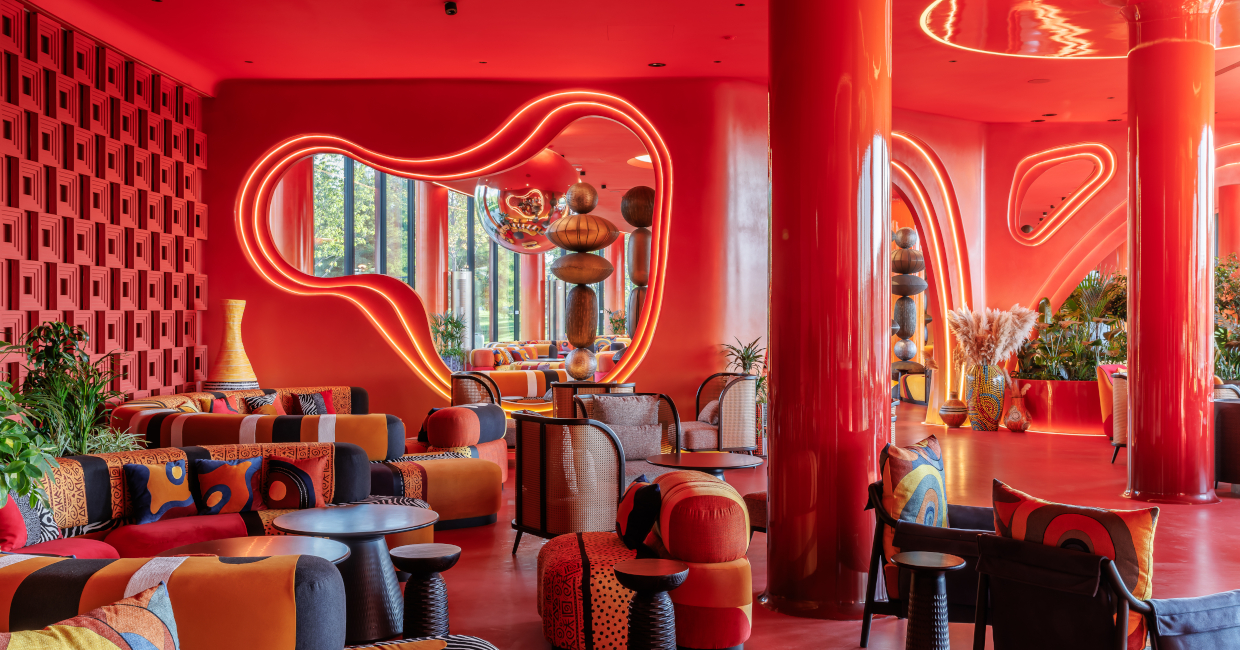
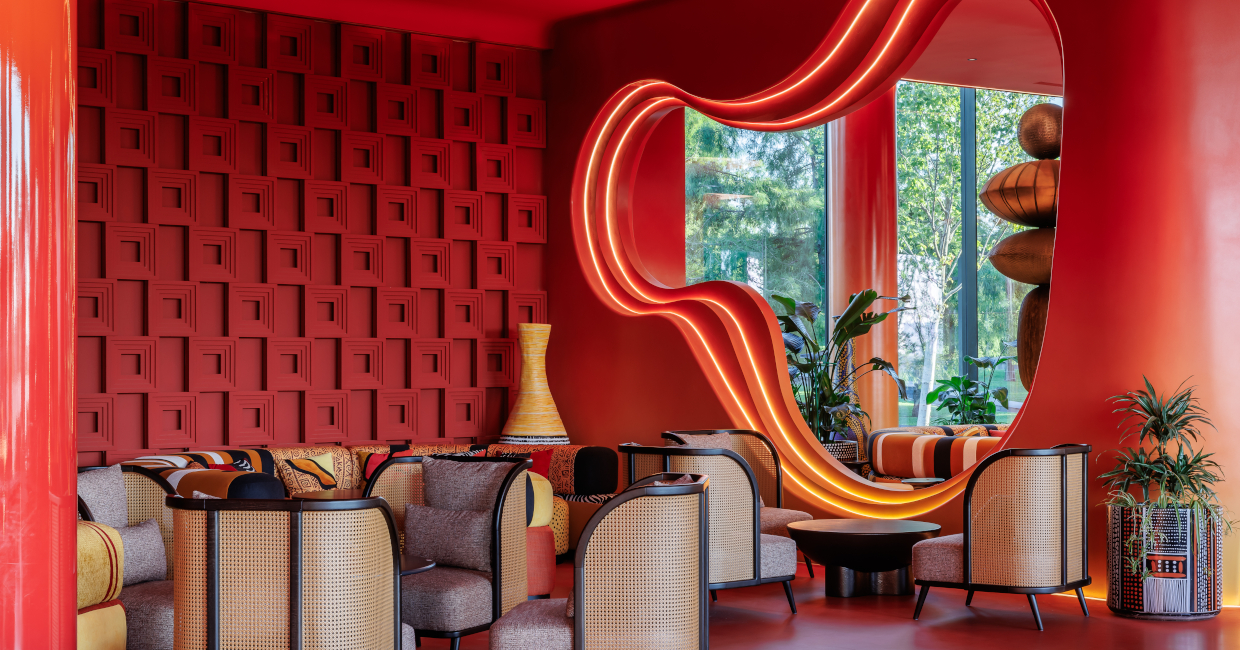
The design draws on organic retro-futurism, with references to the forms and aesthetics of the 1960s and 1970s. Rounded openings, flowing lines, soft furniture silhouettes and intricate geometry create an almost otherworldly environment. Here, futurism is stripped of its technological coolness, becoming something organic, tactile and emotional.
Stylist: Yulia Chebotar
The project’s defining sculptural elements are the tree-like columns. Their forms take inspiration from eucalyptus, plane trees, palms and the ceiba tree, which also grows in the park. They are deliberately not realistic interpretations of nature: glossy surfaces, carved textures and a complex gradient from orange to terracotta translate natural references into a retro-futuristic visual language.
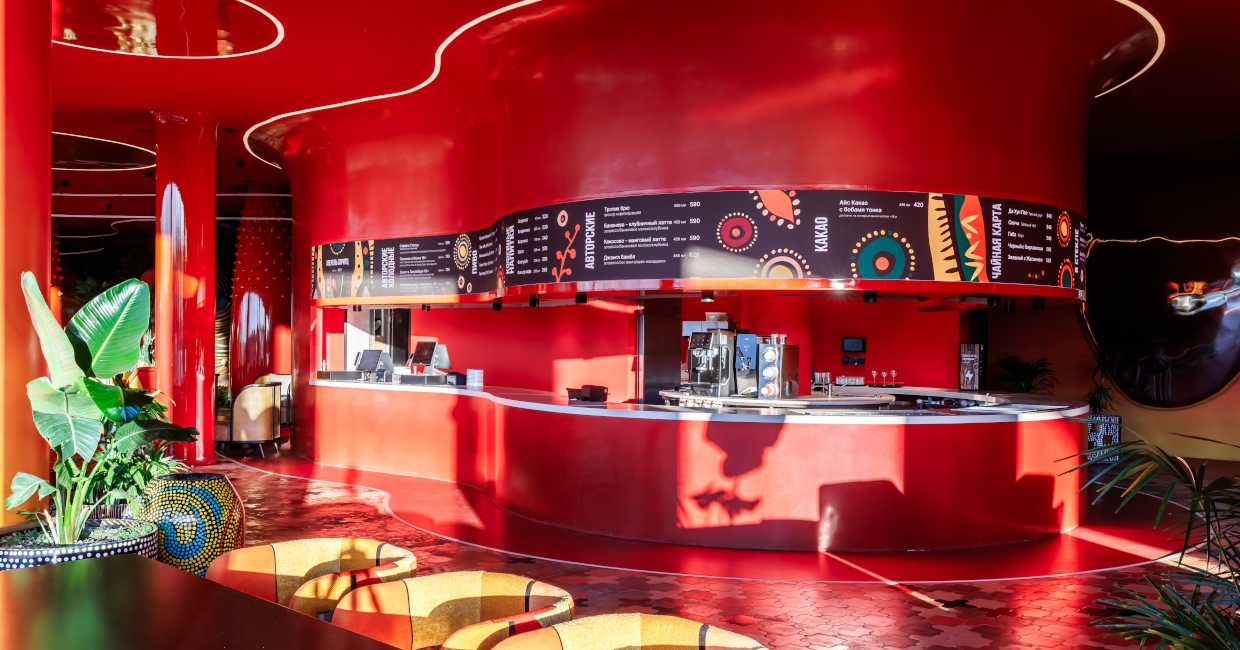
The space is divided into three functional zones. The central area is designed for events and can be separated from the adjoining spaces by layered partitions with illuminated biomorphic openings, creating striking perspectives through the interior.
Stylist: Yulia Chebotar
“This place is, above all, about nature,” said Andreeva-Shchepeteva.
“It is about contemplating the natural world and bringing people closer to it — closer to the earth, to nature, to their own sensations and feelings, and perhaps to emotions in their purest form, which they may not experience in their everyday lives.”
Stylist: Yulia Chebotar
She added: “At some point during the design process, the concept became more clearly defined as an African-inspired space. Perhaps this was also because the interior was taking on such a warm, fiery character. Gradually, it was filled with textures, textiles, a variety of forms, vivid colours and the expressive visual language of African design.”