

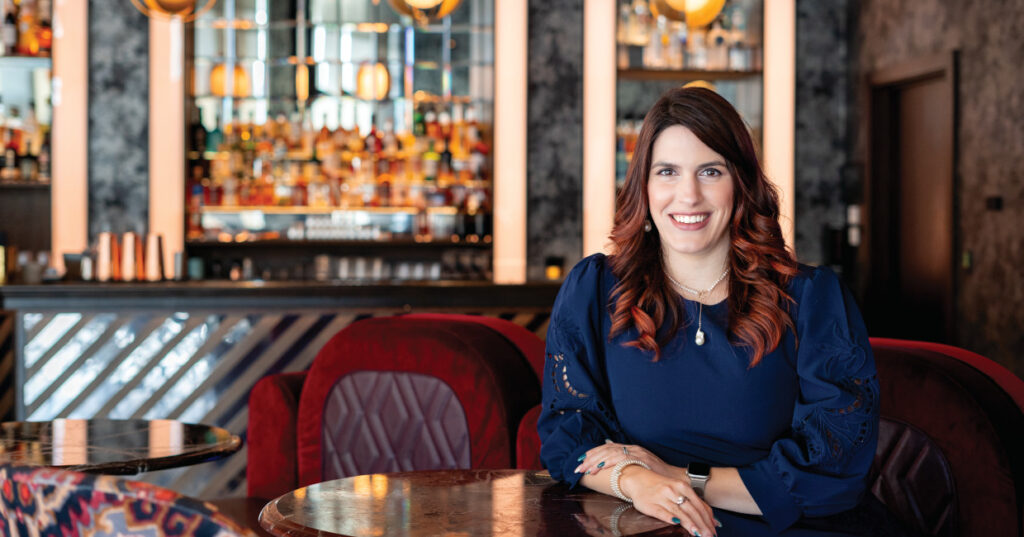

From immersive entertainment destinations in Las Vegas to boutique hospitality projects across the UK and internationally, Ana Moisin Founder & Creative Director of Anamo Design Studio believes great design is about far more than aesthetics. She spoke to Vicky Doe about emotional connection, the evolution of luxury hospitality and why the industry’s future lies in creating spaces people genuinely want to inhabit.
Launching a design studio in the middle of a global pandemic might not seem like the most promising route to success. Yet for Ana Moisin, Founder & Creative Director of Anamo Design Studio, it offered an unexpected opportunity to create a business with purpose from the very beginning.
Established in July 2020, the multidisciplinary interior design studio has since grown into a team of seven full-time designers working across hospitality, social entertainment and luxury residential projects. Looking back, Ana recalls that the absence of immediate projects gave her something equally valuable: time.
“It can’t go any worse than this, I thought, so it’s a pretty good way to start,” she says with a smile. While many businesses were focused on simply surviving, Ana used those early months to build the infrastructure for future growth. “Right from the beginning, I knew where I wanted the studio to get to.”
That clarity of vision continues to underpin the practice today. Although the studio has expanded considerably, its design philosophy remains remarkably simple. Rather than focusing solely on aesthetics, Ana believes hospitality interiors should create an emotional response.
“I believe that great design should always have an emotional connection,” she explains. ” Most of our projects are about emotion – about engineering the feeling the brand would like guests to have before they’ve even registered why. Get that right, and it stays with them long after they’ve left.
It is a philosophy that feels particularly relevant within hospitality, where guest expectations have evolved dramatically in recent years. While beautiful interiors remain important, travellers increasingly seek experiences that feel personal, memorable and authentic. For Ana, before any material palette has been arranged, successful design begins with understanding how a space should make people feel.
“We start by thinking about the experience and the emotion we want to create,” she says. “Whether it’s excitement, nostalgia or calm, we want guests to connect with the space.”
One project that remains especially significant in the studio’s journey is Octane Bar near St Paul’s in London. Completed when the practice was only a year old and operating with a team of three, it represented a defining moment.
“It was one of the first major projects we delivered as a young studio,” Ana says. “The reason it’s so close to my heart is that it represents the trust that the client placed in us and the opportunity to prove what we were capable of.”
The project became a launchpad for larger commissions and international work, demonstrating what a small but ambitious team could achieve. It also reinforced the collaborative culture that remains central to the studio today.
“We are a small studio, but we’re multidisciplinary and multicultural,” she says. “Having people from different backgrounds has definitely contributed to our success.”
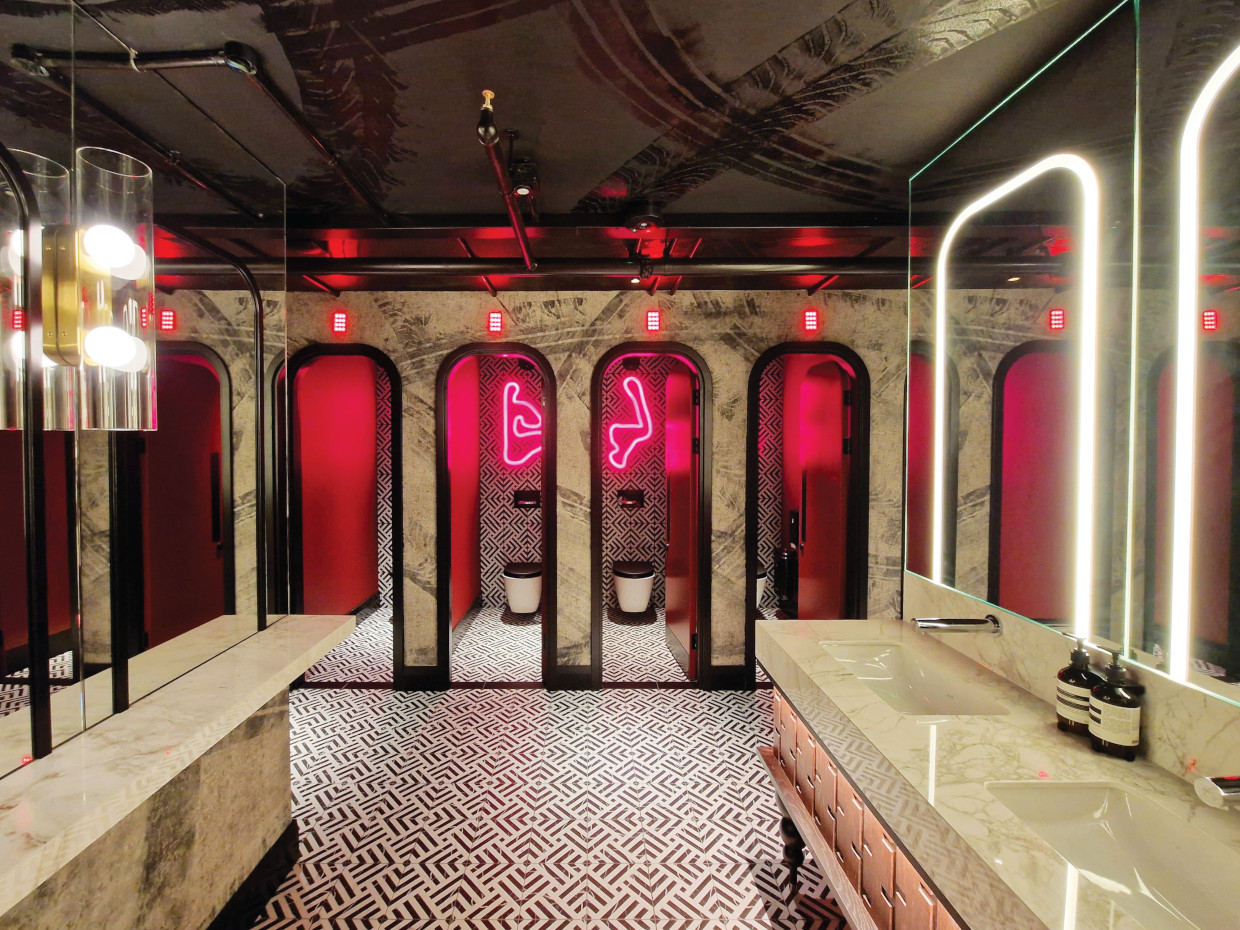
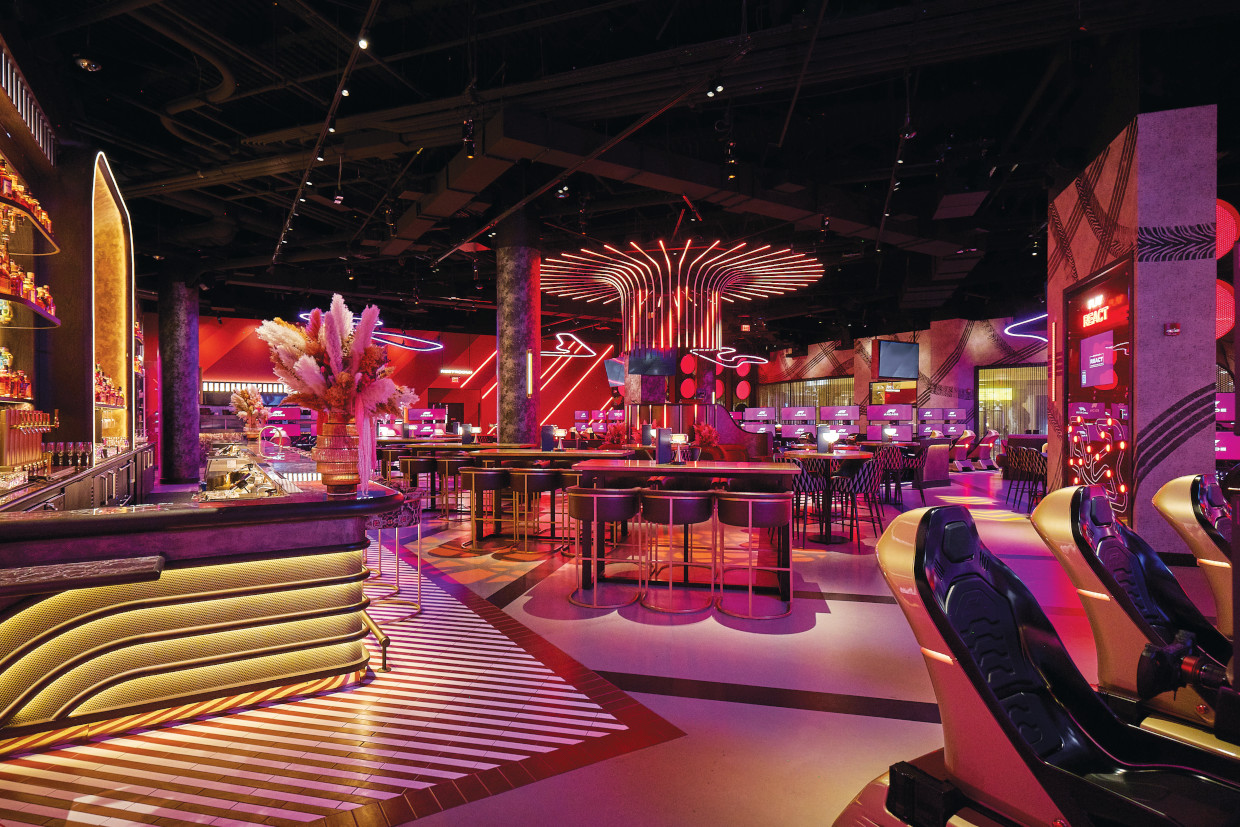
That collaborative spirit was put to the test during the delivery of F1 Arcade’s flagship venue in Las Vegas, one of the studio’s most ambitious hospitality projects to date.
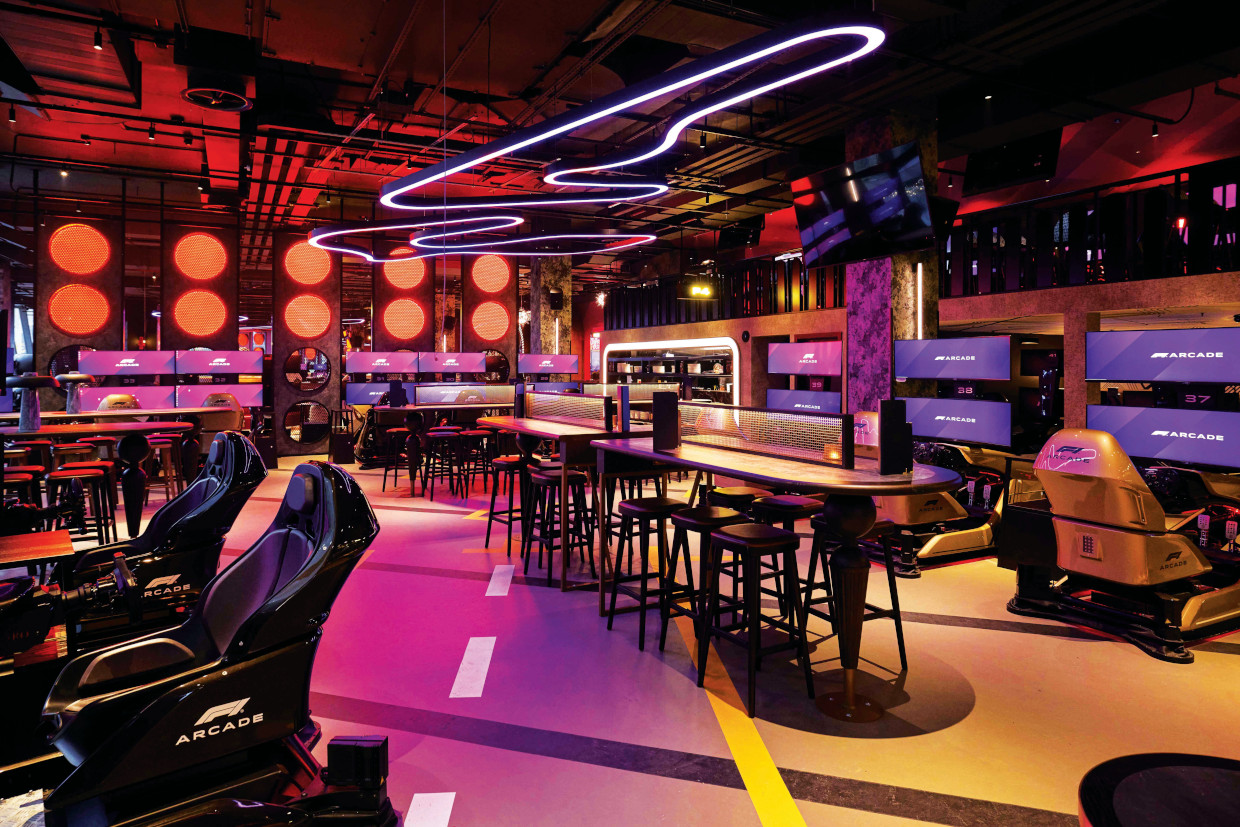
Occupying approximately 2,000 square metres across five combined units, the venue presented an array of challenges, from changing layouts and structural uncertainties to complicated building regulations and unforeseen services concealed within the existing space. Yet Ana speaks about the project less as a catalogue of obstacles and more as an exercise in creative problem-solving.
The real challenge, she suggests, was creating something worthy of its location.
“Everything in Vegas is shouting – everything is loud,” she says. “We couldn’t hesitate for one second. We had to push the acceleration pedal and create something outstanding.”
While the venue is built around a technology-driven experience, Ana was determined that hospitality should remain at its core.
“We had to make it a hospitality-first venue,” she explains. “A lot of guests come in and think it’s a nightclub or an upscale bar, and for us that’s probably the biggest compliment because that is the instinct we were chasing when we were designing it.
That commitment to experience-led design reflects a broader shift she sees within the industry. Ana describes it as the emergence of a “new luxury” – one defined less by extravagance and more by authenticity, privacy and meaningful connection.
“It’s all about privacy, authenticity and creating moments that feel personal,” she says. “I think people are craving that because we spend so much time connected to screens.”
As digital technology continues to dominate everyday life, hospitality spaces are increasingly expected to provide something different: environments that feel human, tactile and emotionally engaging. For Ana, this shift extends far beyond restaurants and bars. It is reshaping the way hotel interiors are conceived as well.
When discussing spaces for sleep, she returns repeatedly to the idea of sanctuary.
“You want a guest room to feel like a cocoon,” she says. “You want it to feel calm, private and restorative.”
Achieving that atmosphere requires more than simply selecting soft furnishings or muted colours. Ana points to layered lighting, carefully considered acoustics, tactile materials and intuitive layouts as essential components of successful hotel design.
“The guest shouldn’t have to think about how to use the room,” she explains. “Everything should feel easy.”
It is a deceptively simple principle. While guests may only notice when something doesn’t work – a light switch in the wrong place or a confusing room layout – the absence of friction can have a powerful effect on overall comfort and wellbeing.
“To make a space feel effortless takes a lot of thought,” Ana says. “But that’s exactly what good design should do.”
This emphasis on clarity also informs her views on the future of hotel design. As hospitality, work and residential environments continue to overlap, she believes many hotels are missing an opportunity to make better use of their communal spaces.
“I think hotels need to bring guests down into the common areas,” she says. “The guest room should be a sanctuary, but everything else should encourage interaction.”
Rather than relying on traditional reception desks and underused lobbies, Ana envisions more dynamic environments where guests can work, socialise and relax within the same carefully curated setting.
“Most lobbies are empty the majority of the time,” she observes. “Perhaps there is a different way of checking in. Perhaps those spaces could do more.”
Equally important is creating environments that appeal not only to overnight guests but also to local communities. By welcoming non-residents into bars, lounges and shared workspaces, hotels can create the atmosphere and energy that encourage guests to spend more time within the building.
“You want people to choose to stay there, not because they have to, but because they genuinely enjoy the space,” she says.
The same practical mindset shapes Ana’s approach to sustainability. While environmental responsibility has become a key consideration across the industry, she is wary of treating it as a box-ticking exercise.
“People often focus on whether a material has recycled content,” she says. “But for us, one of the most important questions is whether that material is fit for purpose.”
A highly sustainable product that requires replacement after a short period may ultimately be less responsible than a durable alternative capable of lasting for decades. Longevity, maintenance requirements and practical performance are all considered alongside environmental credentials.
Ana is equally passionate about applying sustainable thinking within the studio itself, whether through reducing travel, encouraging public transport use or finding ways to reuse materials already available on site.
“It has to start with us,” she says. “If sustainability is important, then it has to be part of how you work every day.”
As the studio looks ahead, its ambitions continue to grow. Current projects include a hospitality venue in New York, an experiential destination in Melbourne and a boutique cinema in Ireland designed to recapture the excitement and anticipation of traditional cinema-going.
Yet despite an increasingly international portfolio, Ana remains focused on the same principles that shaped the studio from the outset.
“We would love to design more hotels,” she says. “Particularly boutique properties that have collaborative communal spaces where people can connect and interact, and where design can work hard to create an unforgettable hospitality experience.”
It is a fitting aspiration for a designer whose work is rooted in human experience. After all, while hospitality trends may come and go, the spaces that endure are often the ones that make people feel something. For Ana, that emotional connection is not simply a design ambition, it is the foundation of everything Anamo Design Studio creates.