

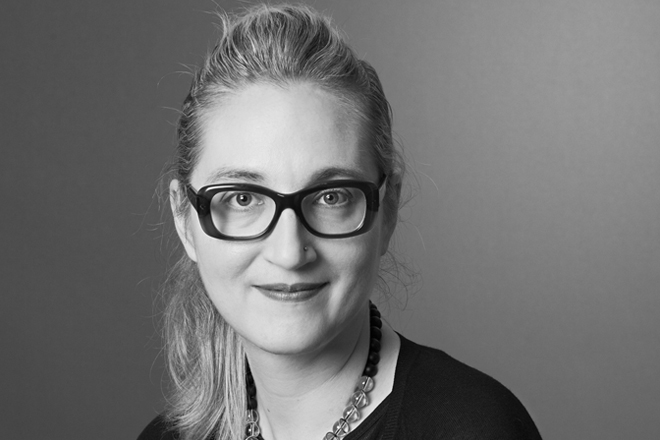

Conran+Partners is designing the Sleep Bar at this year’s Sleep hotel design and development event. Re-imagined by a different design company each year, it is one of the most popular and inspiring features at the show where delegates gather to network, exchange ideas and discuss the very latest in hospitality design. Sleep is on 24th and 25th November at London’s Business Design Centre, with a late opening until 8pm on Tuesday 24th where visitors can enjoy the design inspiration and networking opportunities during the show’s cocktail hour from 6.30-7.30pm. Register now for your free ticket to Sleep 2015.
Hello Tina, please would you describe your background, your ambitions when you were studying and the key episodes during your career to date?
It sounds like a cliché but I did always want to be an architect for as long as I can remember – my father was a landscape architect but I lacked the green thumb so buildings it was.
Originally from Hamburg, a year out in London turned into a new home – studying architecture in the UK was a revelation as it is much more creative and innovative than it would have been in Germany. I studied architecture at Westminster before joining Conran and Partners in 1997, and completed my MA in Architecture & Interiors at the Royal College of Art in 2000.
Working at a multi-disciplinary practice like Conran and Partners combined with my bilateral MA meant interior design was becoming more of a focus for me whilst being able to work in both disciplines at the same time. I have been fortunate to lead on the design of several D+D London restaurants (formerly Conran Restaurants), many of them involving the repurposing of beautiful historic and heritage buildings. I was also lead designer for the award-winning South Place Hotel in Shoreditch, also for D&D, which to date was one of my most personally significant projects.
You are designing the bar at the Sleep exhibition in November around the theme of ‘Wonder Tale’ – describe the visitors can expect to see?
We want the Sleep Bar to surprise and delight. As well as references to Alice in Wonderland, I have also drawn on the slightly darker tales of my own childhood (I grew up in Germany) for example those by the Brothers Grimm, with their surreal undercurrents. So, you can expect to see a kind of hyper-charged reality in The Sleep Bar, with some unexpected perspectives, reflections and ‘upside-down-ness’.
What else are you working on at the moment – and what are you looking forward to that’s in the pipeline?
I am currently working on two new Park Hyatt projects in Asia Pacific, due to complete in 2017. However right at the moment I’m really excited about German Gymnasium, D&D’s latest London restaurant, which opens on November 12th.
With the German Gymnasium project for D&D London, could you describe the brief, the concept and objectives of the space?
As project director, my first responsibility is to ensure that I come up with creative and unexpected solutions that not only meet the client’s brief and objectives, but also exceed them. With German Gymnasium, I also felt a deep sense of responsibility to the building itself. It is an important heritage building and has had other ‘lives’ and as someone with a German background, I was particularly conscious of our responsibility to honour and celebrate the building’s past as well as take it forward to its exciting future as a ‘destination’ restaurant and bar.
German Gymnasium will provide an all-day dining experience, so it felt very natural to us to develop a concept based on a contemporary take on the grand cafes and brasseries of Central Europe, complete with patisserie counter and al fresco terraces. There will even be a four o’clock bell to announce the magic hour of “Kaffee and Kuchen”.
You have worked on some of the world’s most creative hospitality projects and Conran and Partners is celebrating the completion of 100 bar and restaurant projects this year – what approach to the design process do you believe yields the most successful results for the client and the end-user?
Unsurprising, because of my architectural training I approach interiors three-dimensionally and volumetrically, exploring the ways spaces will be used. I am also a big fan of modernism so my personal tendency is to eschew fussy ornamentation and favour clean lines and natural materials. Ultimately, though, the design work has to respect the purpose of the hospitality function – so the need to ensure that ‘form follows function’ is paramount.
Compared to the food, how important is the interior design to a restaurant becoming a sustained success and what creative pitfalls must all restaurants avoid at all cost?
The key to success will always be great food and great staff, but design is the third in the magic triangle. Creating an environment guests enjoy being in is the key, something that captures their imagination and where they want to spend time. Trying to be too fashionable without a conceptual background, creating spaces that don’t consider human beings, are key things to avoid. And spaces that don’t work operationally will always fail as the service will be compromised, or changes will creep in that dilute the design.
The fashion for blending a range of activities into the lobby-reception area has created a range of solutions for the public spaces within hotels – do you feel that guest room design is stagnant by comparison?
A very interesting point that goes back to the distinction between public and private space and how people actually use space functionally. Unless we are talking suites, guest rooms are like condensed versions of a dwelling. There are simply certain things a guest room should have (bed, chair, bathroom) and making these too different and ‘innovative’ is more annoying than pleasant.
As a result a lot of hotel designers (rightly) opt to experiment in public areas that are more transient and public and leave the guest rooms as a safe haven for the guest. So, for me, guest room innovation is more about making the experience more pleasurable, easier, and simpler rather than trying to be too clever. Innovation is best left to new technology, clever new sanitary or brassware, lighting and construction technology.
What are the most important creative developments in hospitality design that you have witnessed over the last fifteen years, and looking forward, what challenges will designers need to create solutions for?
Eroding the traditional spaces in hotels into more open, welcoming and flexible environments has been great both as a designer and as a guest. The opportunities for creating interesting spaces are fantastic and it is great fun to develop these with the client.
The move to Airbnb and other homestay websites has had an impact on the design of public and private areas and many briefs now ask for a residential feel. Combining the two but keeping the line between them is a challenge for designers – does a hotel still wants to feel like a treat and an environment in which you are ‘looked after’?
On the other hand, technology and innovations in this field have been incredible but have also resulted in systems that are too complicated, with components that are quickly out of date. This can lead to having to play a constant game of ‘catch up’, chasing the latest gadget. Trying to design hospitality environments that capture the moment in this area but don’t become outdated in a year or even less is a huge challenge for designers and operators.
Describe your top three interior spaces, from anywhere in the world, and why do they resonate with you?
I love The Waterhouse by Neri and Hu in Shanghai – ethereal with a great story and hugely atmospheric.
Another favourite is Downtown by Grupo Habita in Mexico City – an old convent in the old town with a magical central courtyard, which creates a strange lawn-like impression on the guest room floor.
And despite being prejudiced, I have to say the German Gymnasium is an amazing space with a fascinating history and a rather decent interior design!
If you were to design a hotel with a restaurant and a bar from the ground up – what would be the defining elements?
A great story to base the design on has to be the starting point – a concept derived from research into the area, history, the client ambitions, and the style of operations. With this as a starting point the type of restaurant will become obvious, how it relates to the bar, if the reception is in the bar or separate.
The key is to tell an overriding story to bring all elements together into a Gesamtkunstwerk – to use my native tongue!