

Close Menu
Hospitality InteriorsHospitality Interiors
  • News
  • Articles
    • Interviews
    • Opening Shots
    • Products
    • Profiles
    • Projects
    • Resources
    • Trends
  • Magazines
    • Issue 123 – Jan/Feb 2026
    • Issue 122 – Nov/Dec 2025
    • Issue 121 – Sept/Oct 2025
    • Issue 120 – July/August 2025
    • Issue 119 – May/June 2025
    • Design Destinations December 2025
    • Design Destinations August 2025
    • Design Destinations: June 2025
    • All Recent Issues
  • Sponsored Content
  • Events
    • Sustainability in Design Awards
  • Email Newsletters
  • About Us
    • Advertise
    • Contact Us
LinkedIn Instagram
Hospitality InteriorsHospitality Interiors
Subscribe to Magazine
  • News
  • Articles
    • Interviews
    • Opening Shots
    • Products
    • Profiles
    • Projects
    • Resources
    • Trends
  • Magazines
    1. Issue 123 – Jan/Feb 2026
    2. Issue 122 – Nov/Dec 2025
    3. Issue 121 – Sept/Oct 2025
    4. Issue 120 – July/August 2025
    5. Issue 119 – May/June 2025
    6. Design Destinations December 2025
    7. Design Destinations August 2025
    8. Design Destinations: June 2025
    9. All Recent Issues
    Featured

    Hospitality Interiors: Issue 123 – January/February 2026

    29 January 2026
    Recent

    Hospitality Interiors: Issue 123 – January/February 2026

    29 January 2026

    Design Destinations: South East Asia Edit 2025

    19 December 2025

    Hospitality Interiors: Issue 122 – November/December 2025

    13 November 2025
  • Sponsored Content
  • Events
    • Sustainability in Design Awards
  • Email Newsletters
  • About Us
    • Advertise
    • Contact Us
LinkedIn Instagram
Subscribe to Magazine
Hospitality InteriorsHospitality Interiors
Resources

Making sustainability part of the plan

Katie SherryBy Katie Sherry8 August 20143 Mins Read
Share
Facebook Twitter LinkedIn

In the busy world of hotels, pubs, bars and hospitality in general, moves are afoot towards embracing the ethics that surround all aspects of introducing sustainability into the blueprint of the business.

After all, increasing numbers of your existing and prospective customers are likely to be ethical buyers who are discerning in what they buy and the environment in which they spend their time.

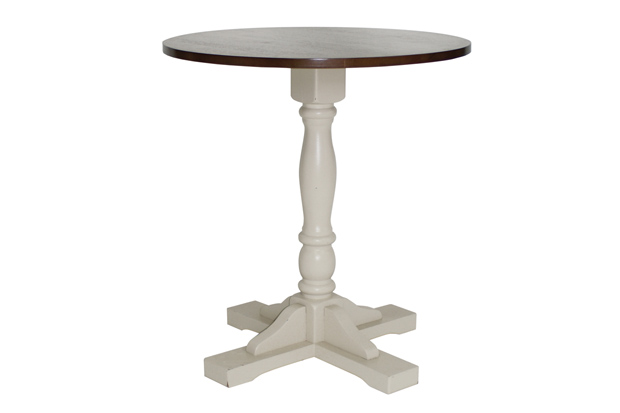
Pub Stuff offers recycled contract pub furniture to the pub, hospitality and leisure trade and are in the maelstrom of growing interest from commercial customers grasping the concept of upcycling furniture.

Breathing new life into the recycled products which come from managed houses when they refurbish, Pub Stuff are able to offer a huge range of quality recycled furniture. The high quality finish and end result is achieved through careful refurbishment and attention to changing trends in the hospitality market reflected in a wide choice of fabrics, soft furnishings and furniture styles.

This has come about not only because of the bite of the recession of recent years where upcycling proves a cost effective approach, but it is environmentally friendly too. What could be better than calling a halt to skips filled with discarded, perfectly good furniture?

Complementing huge stocks of recycled contract furniture, Pub Stuff also commission new lines of furniture which are made from Rubberwood derived from latex producing trees. Latex is of course used to produce all rubber-based products that can be found around the globe.

Once the latex has been drained from the tree, after a usage of around 20+ years, the tree is considered to be waste and is felled with a new tree planted in its place. This therefore presents an opportunity to create new durable furniture using wood that will not deplete vital resources and whose sole existence is not only to produce furniture. Hence the concept of sustainability is well used by re-using something that would have otherwise gone to waste.

Rubber wood, or Hevea Brasiliensis, is a member of the maple family and is ideally suited to this purpose as it is a stable and close grain wood which means that it contains a low water content of between 8 – 10%.

During the kiln drying process it is easily controlled and has very little shrinkage. This ensures minimal movement either during the manufacturing and assembly stage or as a finished product situated in a centrally heated environment or directly adjacent to a radiator.

It is not indigenous to the UK and, given the demand for latex to create rubber products, supplies are readily available to cope with demand.


Previous ArticleJestico + Whiles appointed to design resort hotel in Zanzibar
Next Article Why modular furniture is fit for purpose
Katie Sherry

Read Similar Stories

Foundations laid for the Heimtextil Interior.Architecture.Hospitality LIBRARY

7 December 2022

Design innovation and expert insights at Independent Hotel Show 2022

19 September 2022

Hospitality’s personalisation problem – and how to solve it

3 May 2022
Latest Content

Fifteen New HIMACS Colours for 2026 Bring Depth, Texture and Sustainable Design Choices

Anantara Downtown Dubai Hotel unveils a New Era of Contemporary Urban Luxury

IDILIQ Hotels & Resorts Unveils New Openings for 2026

Sponsored Content

Fifteen New HIMACS Colours for 2026 Bring Depth, Texture and Sustainable Design Choices

27 February 2026

Signature50: A Classic Wood Floor for Hospitality Spaces That Demand More

11 February 2026
Get in Touch
  • About Us
  • Advertise
  • Contact Us
  • Subscribe
© 2026 Lewis Business Media. All Rights Reserved.
Lewis Business Media, Suite A, Arun House, Office Village, River Way, Uckfield, TN22 1SL

Privacy Policy | Cookie Policy | Terms & Conditions

Type above and press Enter to search. Press Esc to cancel.

Hospitality Interiors
Managing Your Privacy

To provide the best digital experience, we use cookies to store and/or access device information. Consenting to our use of cookies allows us to process data such as reading behaviour. Not consenting or withdrawing consent, may adversely affect certain features and functions.

Functional Always active
The technical storage or access is strictly necessary for the legitimate purpose of enabling the use of a specific service explicitly requested by the subscriber or user, or for the sole purpose of carrying out the transmission of a communication over an electronic communications network.
Preferences
The technical storage or access is necessary for the legitimate purpose of storing preferences that are not requested by the subscriber or user.
Statistics
The technical storage or access that is used exclusively for statistical purposes. The technical storage or access that is used exclusively for anonymous statistical purposes. Without a subpoena, voluntary compliance on the part of your Internet Service Provider, or additional records from a third party, information stored or retrieved for this purpose alone cannot usually be used to identify you.
Marketing
The technical storage or access is required to create user profiles to send advertising, or to track the user on a website or across several websites for similar marketing purposes.
  • Manage options
  • Manage services
  • Manage {vendor_count} vendors
  • Read more about these purposes
Cookie Preferences
  • {title}
  • {title}
  • {title}