

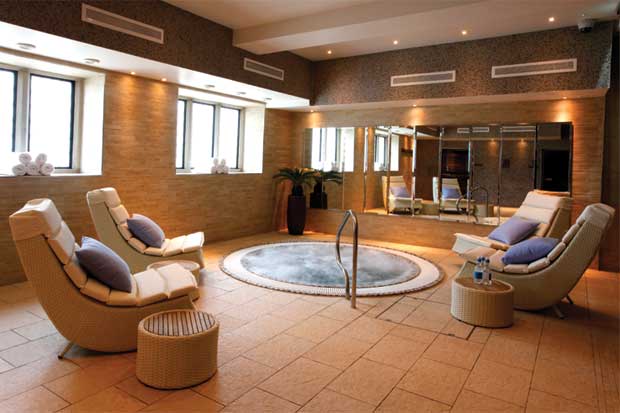

Making the decision to install a spa in a hotel is a big step, and often requires a considerable investment. The rewards, however, could be significant in terms of an increase in visitors and turnover. Alistair Johnson, managing director of Spa Creators UK, explains how to decide whether the investment in a spa is right for your hotel …
The UK spa market has continued to see some steady growth in the last couple of years, despite a recessionary environment. This growth is undoubtedly fuelled by spas that have been well established and have carefully developed their business model to match their local market. The market potential for spas is still very strong, with 41% of the spa market being categorised in hotel or resorts.
Over 6m people visited spas in the UK in 2011 and 2012, and this figure is expected to grow in 2013 thanks to a steady interest from the over 55-year-old market and an increase in younger spa-goers in their 30s.
The split between female and male spa-goers is 60/40% respectively. The ratio for day spas leans more towards women, but the number of men visiting such venues is on the increase.
Wellness tourism is an emerging trend in the hotel market, with people looking for retreat breaks to escape the demands of their busy lives. The most popular treatment is a 30-minute back, neck and shoulder massage, followed by an express facial.
Retail sales can account for upwards of 25% of revenue from treatments. Treatment sales make up 25-30% of the net profit, with an average treatment room generating an income of between £50,000-100,000.
However, it is important to note that a feasibility study is vital to the success of a spa project. For every three projects that I work on, two are not suitable for a spa installation. You can, of course, do a lot of this ground work yourself with time spent on understanding your local market.
One of the things to consider is whether your hotel is in an area that may be suitable for a spa. Finding the answer to this may require some time to evaluate the potential size of the market opportunity in the local vicinity.
It is also worth analysing your current guest profile and business footfall, and whether you have the potential to attract local customers as well as staying guests. Taking a look at the competition and seeing what your competitors are already offering is also a good way to move forward.
The addition of a spa within a hotel will undoubtedly alter the equilibrium and focus of the marketing strategy, so it is vital that your staff buy into the project.
Finally, it is also important to ensure that your hotel has a realistic amount of space to facilitate a spa. However, don’t be put off if you think you do not have the space – a spa does not need to be vast, you must simply ensure that you do not overstate your final spa offering.
When considering where to build a spa, the following spaces are ideal for conversion. Exisiting leisure facilities – most likely developed in the 1980s – are good areas for conversion. Squash courts, for example, can be converted into two floors, and can create up to five treatment rooms including relaxation areas, which is ideal for a 40-50 bed boutique hotel.
As a result of a decline in the conference market, conference facilities are also ideal spaces for conversion. These spaces are often large and located centrally in the property, sometimes without a view – making them ideal for treatment rooms. These spaces can utilise joint food and beverage services, an important consideration when converting space for a spa.
Basement or cellar space may currently be under-utilised, and may provide the perfect solution for a spa. With mood lighting, a view or natural daylight is not essential, and size is not always an all-important factor. The Cathedral Quarter Hotel in Derby, for example, used an existing basement to create three treatment rooms including one double room, a reception and relaxation area with a sauna, a steam room and an experience shower.
Once decided whether a spa is suitable for your hotel, the question on your mind will undoubtedly be: will a spa give me a return? Ways in which spas can increase revenue include driving short the short-break leisure market, offering an extra incentive for guests when choosing a hotel, creating spa packages to increase room sales and extending income out of season.
Alistair Johnson is the managing director of Spa Creators UK, a leading spa consultancy firm based in Reading, Berkshire. The company helps to develop spa designs and build projects, while offering advice on commercial planning, brand development and marketing. Recent projects include the Captain’s Club Hotel in Christchurch, Dorset, Ellenborough Park in Cheltenham, Gloucestershire, and the Mere Resort hotel and spa in Knutsford, Cheshire.