

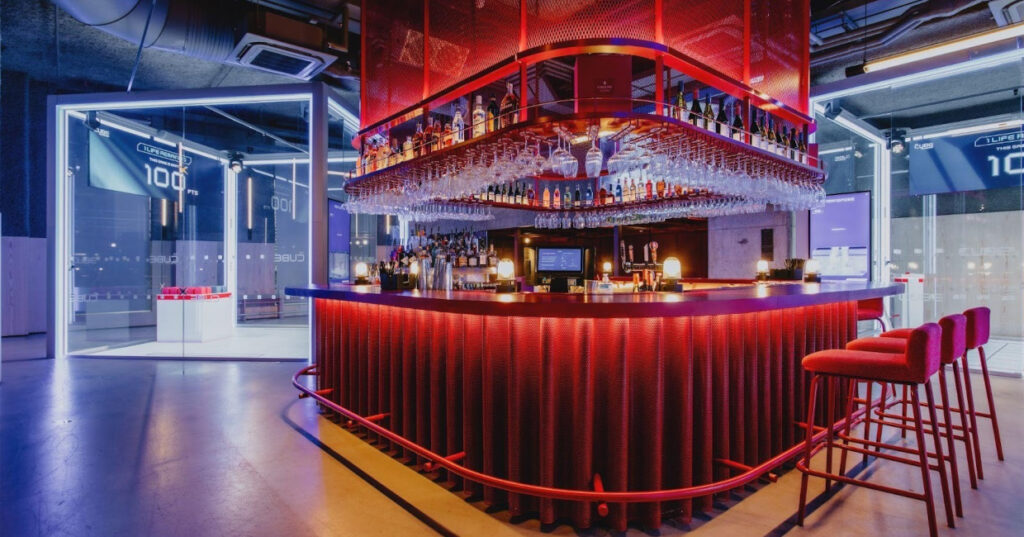

Visiting The Cube Canary Wharf, I was immediately struck by how Baranowitz + Kronenberg have transformed a well-known UK television game show into a fully immersive architectural experience. The space is playful and theatrical, yet sophisticated – a perfect example of how design can shape experience, movement, and emotion.
Spanning 27,000 sq ft across two interconnected floors, the venue turns competitive play into architecture. Twenty-one cubic game structures are stacked, layered, and scattered across the space, alongside seven bars and a restaurant. The design encourages movement, socialising, and observation, with players and spectators able to shift roles effortlessly. A section of reinforced concrete slab has been removed to physically and visually connect the two floors, creating a sense of openness and flow.
The material choices immediately catch the eye. Concrete, steel, and Douglas fir plywood reference Canary Wharf’s industrial past, while LCD floors and walls, aluminium, and glass add a sleek, high-tech touch. This combination of raw and refined, analogue and digital, grounds the space in its context while signalling modernity. The tactile, honest materials contrast beautifully with the polished, technological surfaces, giving the venue both warmth and precision.
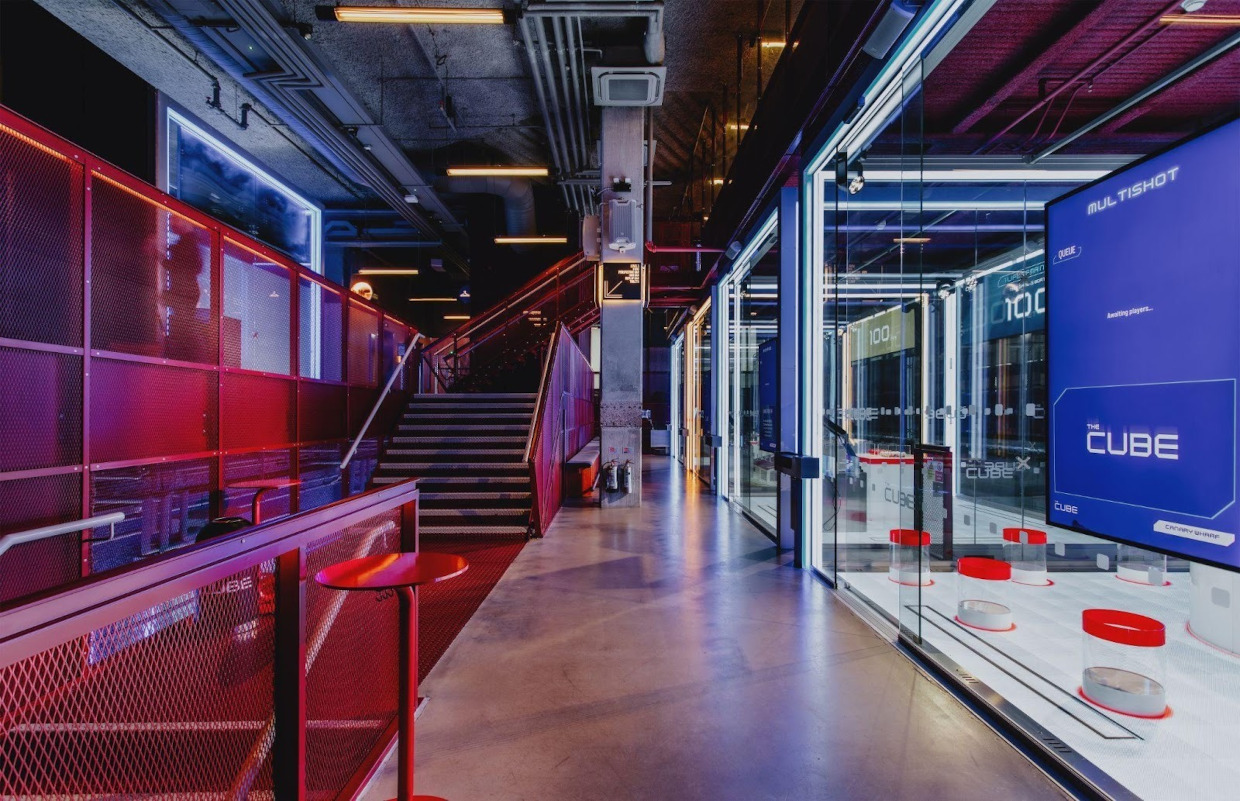 The arrangement of the cubes feels intuitive yet surprising. Each structure is positioned to encourage circulation, curiosity, and engagement. Some are stacked, some isolated, creating dynamic lines of sight across the venue. This careful choreography ensures players can focus on the games, spectators can watch comfortably, and social interaction happens naturally. Colour, lighting, and lounge areas provide moments of pause, softening the intensity of the competitive spaces and making the environment welcoming for all.
Baranowitz + Kronenberg’s people-first approach is clear throughout. The architecture doesn’t dictate behaviour; it supports it. Every decision, from spacing and circulation to materials and lighting, considers how guests move, watch, wait, and react. The result is a venue that feels alive, where tension, anticipation, and delight can be shared and amplified through the environment itself.
The Cube hosts seven of the original television games, each designed to test physical and cognitive skills such as balance, speed, and judgment. The studio’s challenge was never to replicate TV, but to transform its emotional intensity into a spatial experience. Here, architecture amplifies gameplay: every cube, every surface, every transition contributes to the excitement, suspense, and drama of the games.
The venue’s social spaces are just as thoughtfully designed as the cubes themselves. Seven bars and a restaurant are carefully integrated, providing natural pauses for gathering, observation, and conversation. These areas balance the high-energy zones with moments of retreat, ensuring the overall experience is both stimulating and comfortable.
Lighting and colour are used strategically to guide attention and mood. Brighter, dynamic lighting highlights gameplay areas, while warmer, softer tones mark lounge spaces. This contrast creates rhythm and flow throughout the venue, enhancing both play and social experience. Guests move through zones of intensity and calm, allowing the architecture itself to direct engagement without instruction.
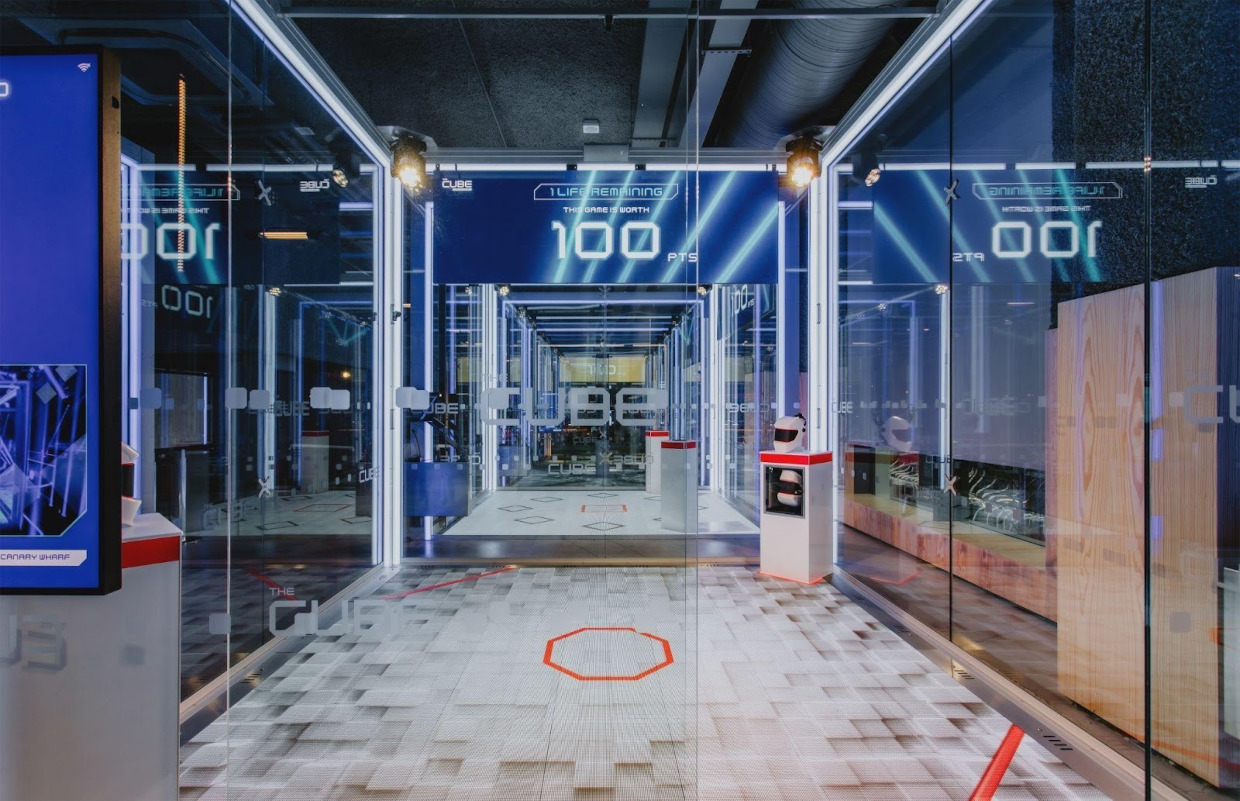 The Cube also responds directly to its Canary Wharf context. The industrial textures nod to the area’s docklands heritage, while modern materials reflect its status as a global financial and digital hub. This dialogue between past and present is echoed throughout the interior, where raw and polished, analogue and digital, historic and contemporary coexist seamlessly. It gives the space a strong sense of place and identity.
What impressed me most during my visit was how the design shapes behaviour. Players feel energised by the environment, spectators are invited into the action, and social interactions unfold naturally. The architecture itself encourages curiosity, movement, and play, making The Cube more than just a gaming venue, it is a living, interactive environment where design drives experience.
The Cube Canary Wharf demonstrates how narrative-driven design can turn a concept into an immersive spatial experience. Every detail – from materiality and lighting to cube placement and circulation – has been carefully considered to support engagement, social interaction, and storytelling. It’s a powerful reminder that thoughtful architecture can transform even a simple form of entertainment into something memorable, sophisticated, and exciting.
For anyone interested in experiential design, hospitality, or interactive spaces, The Cube provides plenty of inspiration. It shows how architecture can amplify emotion, support human behaviour, and create a cohesive, immersive experience. Visiting the venue, I left inspired by how carefully considered design can make spaces both functional and playful, striking the perfect balance between spectacle, comfort, and interaction.
Baranowitz + Kronenberg have created a space where architecture, technology, and human emotion intersect. The Cube Canary Wharf is an urban playground, a social stage, and a design-led entertainment venue all in one. It proves that well-designed spaces don’t just host activity — they shape it.