

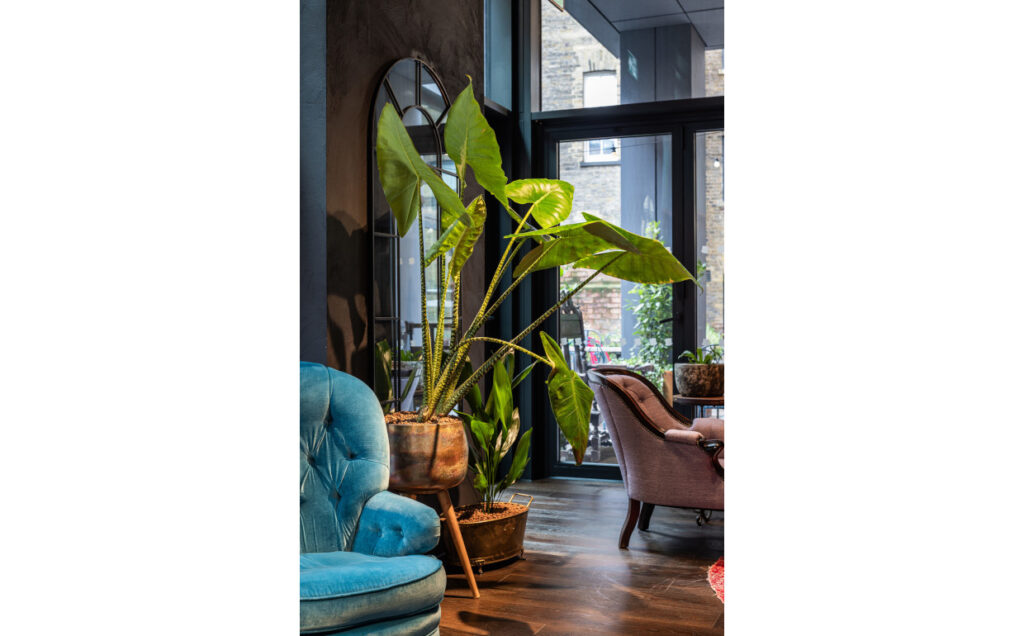

As hospitality planting specialist Leaflike looks ahead to a busy year delivering a number of prestigious hotel projects, it is a timely moment to reflect on what distinguishes the world’s most successful hospitality environments. Across luxury hotels globally, one principle consistently underpins guest satisfaction and long-term brand loyalty: biophilic design executed with intention, expertise, and care.
Biophilic design has matured to the extent that nature is no longer treated as a decorative layer in hospitality settings, but as a fundamental component of experience design — one that quietly shapes how guests feel, move, and connect with a space from the moment they arrive.
Rooted in our innate human affinity for nature, biophilic design is increasingly recognised for its ability to support wellbeing, reduce stress, and enhance comfort. In a hotel context, these effects translate directly into guest satisfaction, dwell time, and long-term brand affinity. When thoughtfully integrated, planting schemes help create environments that feel calm, welcoming, and memorable — qualities that are essential in a competitive luxury market.
The most successful hotels approach biophilic design holistically, considering planting as part of the entire guest journey rather than confining it to statement moments in the lobby. Arrival spaces may set the emotional tone, but restaurants, lounges, corridors, spas, and even transitional areas such as lifts and stairwells all benefit from a consistent and considered relationship with nature. When greenery flows intuitively through a building, guests experience a sense of cohesion and ease — often without consciously recognising why a space feels so comfortable.
Longevity is another defining characteristic of exemplary biophilic design. Rather than designing schemes that peak on opening day, leading hospitality projects prioritise planting that will mature gracefully over time. Species selection, scale, and placement are all informed by how a scheme will evolve, ensuring interiors continue to feel refined and intentional years after launch. This approach not only protects design integrity but also supports sustainable investment over the life of the building.
Crucially, maintenance is not an afterthought. Hotels and hospitality settings that excel in biophilic design plan for care and longevity from the outset, considering access, irrigation, replacement cycles, and ongoing plant health as part of the original design brief. Well-maintained planting communicates a powerful, if subtle, message to guests: that attention to detail extends beyond what is immediately visible, and that the environment — and by extension the guest — is genuinely cared for.
Environmental factors such as light, airflow, and acoustics further shape the success of biophilic schemes. Plants interact with these elements to soften sound, improve air quality, and filter natural light, contributing to a more comfortable sensory experience in busy social spaces. Increasingly, forward-thinking hotels are also extending these principles into back-of-house and staff areas, recognising that environments which support employee wellbeing ultimately enhance guest service and operational performance.
When biophilic design is approached as experience design rather than decoration, the impact is clear. Guests feel calmer, more comfortable, and more at ease — and when those conditions are present, happiness follows naturally.
Leaflike is a specialist in planting and interior landscaping for luxury hospitality and commercial settings. www.leaflike.co.uk