

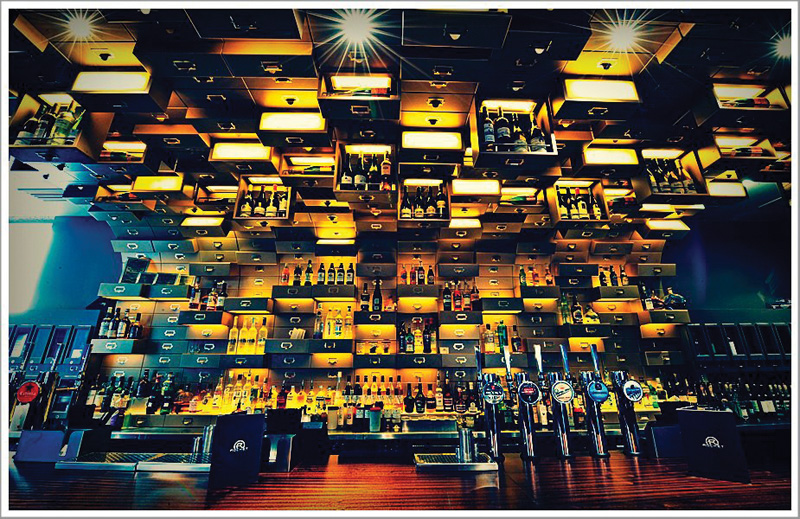

Successful bars and restaurants must combine a number of elements in order to provide both a high-quality and consistent product for their consumers. James Horler, director of many leading casual dining brands including Rocket, Ego, Ping Pong, Patisserie Valerie, Red Hot World Buffet, Coal and Severnshed, explains how the interiors in his venues play a vital role in setting the mood and keeping customers coming back.
The look and feel of a venue is often the very first thing that a customer will see, whether this is as they step into the building or in an image in a newspaper, magazine or website. First impressions count for a great deal – they can even result in guests leaving if they don’t feel comfortable. Ensuring that the interior sets a precedent for what should be expected in product delivery and customer service is a vital component of any hospitality operation.
“When I first launched Frankie & Benny’s restaurants in the UK nearly 20 years ago,” explains James, “the theme and experience would be fulfilled within the food on the menu, the attitude of the staff and, of course, the interior design of the venues. The New York diner and American barbershop decorations extenuated the fun-filled, almost hectic atmosphere. Old photographs, deep red colours, leather booths and themed memorabilia on the walls, helped to bring this all together.
“The experience of eating at Frankie & Benny’s stayed with guests throughout the entirety of their stay. We created a story reflected in the interiors to give customers a unique experience, leaving them in no doubt as to which restaurant they were eating in.
“Setting the tone for a venue will inform customers how they should behave, roughly how much items will cost, the target audience and what length of time they would expect to spend there. Ensuring people are in the right frame of mind for the type of food and drinks they will be purchasing is key to keeping satisfaction levels, and therefore repeat business, high.
“My Rocket chain of restaurants, situated across central London and Nottingham, all share a consistent interior theme to tie them together, yet have their own personalities tailored to the differing target audiences. The site in the City of London is split over three floors, and the dark-coloured leathers, shaded lighting and deep wood finish provide a very masculine atmosphere to attract nearby office staff and bankers socialising after work. This is in comparison to the Bishopsgate site, a much lighter, airier space with bright colours splashed throughout, lending itself naturally as an inviting place for women and creative types from nearby Shoreditch to eat and drink.”
“Creating original, intimate and spectacular spaces for diners to be wowed by and enjoy can be what it takes to win custom from the competition”
But over the last 15 to 20 years, a move for dining and socialising to become a more open and engaging space, comfortable for both the sexes – and families for that matter – interior design has changed significantly becoming more egalitarian.
“When attracting women to a restaurant or bar, psychologically it’s important to be able to see the inside of the venue,” says James. “Lots of glass on exterior walls or images of the venue will showcase to customers what they can expect if they step inside, creating a great sense of safety. Men, on the other hand, are genuinely happier to step into the unknown, so depending on the target audience of the venue, the exterior should be designed accordingly. Usually I find that, where possible, an exterior that ticks both boxes is desirable.
“Colours, light, furniture and fabrics are the four main elements of hospitality interior design, central in attracting different audiences. Ensuring that these all work together to complement the food, staff and overall feel of the venue is vital.”
The Ego restaurant chain serves Mediterranean cuisine across eight sites in the North of England. These venues are very much an example of the interior being designed around the food in the kitchen. With Greek, Spanish, Italian and Moroccan flavours dominating the menu, the key element that ties the whole idea together is the Mediterranean Sea.
“The interior therefore has a nautical theme, with lots of wood as a nod to the deck of a ship and light blues and whites to represent the calm of the sea,” says James. “This also doubles as a blank canvas for guests, there is no interior decoration that is tied to any particular country, so very much like the menu there is something for everyone to enjoy.”
At the top end of the restaurant market, competition for customers is fierce. The number of kitchens with a Michelin star is always on the rise - at last official count in 2012, there were 146 in the UK, 45 of which are in London.
“The food and service at every Michelin-starred restaurant will be of the highest quality. Therefore, apart from location, it is often only the interior design that sets them apart. Creating original, intimate and spectacular spaces for diners to be wowed by and enjoy can be what it takes to win custom from the competition.
“People eat out rather than cooking at home because they want to be treated, they want service they wouldn’t normally get and dishes they wouldn’t cook themselves. They also want to experience an atmosphere and venue that is better than their own homes, whether this involves an impressive view, designer furniture or decedent architecture. The quality of the room must match and complement the quality of the food in order to justify high price tags.
“One of my favourite Michelin-starred restaurants is the Pollen Street Social in London. Here, Jason Atherton has created a simple but luxurious interior, that allows the food to do the talking. As soon as you walk in, the atmosphere that is created lets you know that you are in an expensive, high-quality establishment. With a leather and wood finish, these luxurious materials ooze quality and really set the scene before you eat.
“The interior of a restaurant shouldn’t be limited to just what the consumer can see,” says James. “Sound and music should also complement the design to create an experience that delivers to all senses. At Frankie & Benny’s we used traditional classics in the style of music, but the experience was never broken, with Italian lessons being played in the toilets so that the customer could become fully immersed in the theme.
“The interior design of any hospitality venue is a key ingredient for running a successful business. It is not the be-all and end-all, but without a great interior that not only fits, but also drives forward the theme and style of the restaurant, there will always be something missing.”