

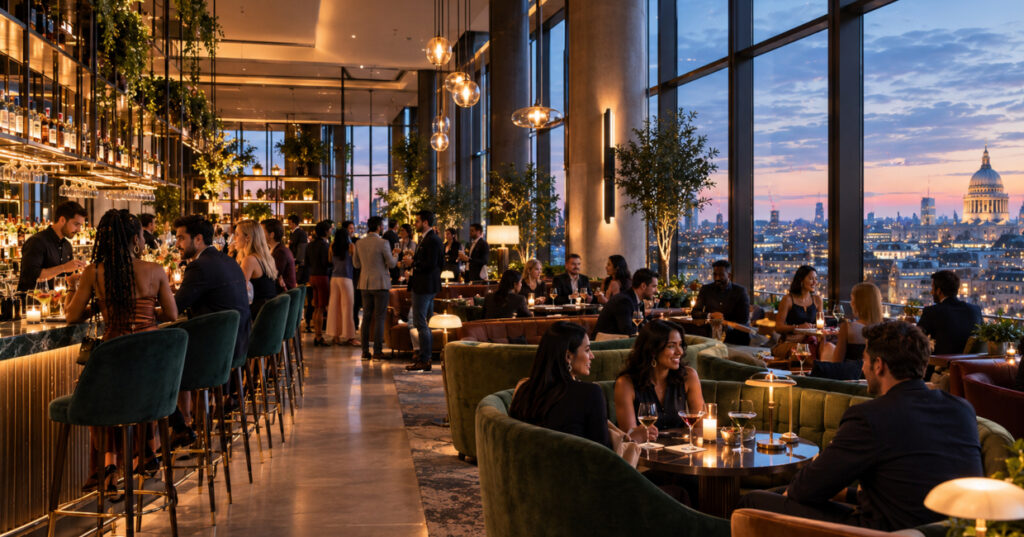

Plenty of operators have already paid to fix the sound in their venues. Until now, they have had no way of showing it. A new independent certification aims to change that.
For a decade, hospitality interiors have been designed for the eye more than the ear, leaving many rooms that look great and are hard to talk in. Many operators have since done something about it. Acoustic panels went up behind the banquettes. Ceilings were treated, and an acoustic report confirmed it worked. The difference tends to show quickly.
“The transformation is amazing,” says Alice Passey, owner of SJQ. “My staff previously experienced difficulty in focusing and mental fatigue after a busy, noisy shift. They can now easily hear and communicate with customers.”
The investment nobody sees
Then the report goes in a file. A guest choosing where to book can see reviews and dozens of photos, and none of it says whether they will be able to hear the person across the table. From outside, a treated dining room and an untreated one look identical.
That gap matters because noise is expensive in ways that rarely surface. Research published in Scientific Reports found willingness to spend starts falling once a room passes the level of normal conversation, and past about 62 dB customers reported spending less than a quarter of what they had intended. The RNID SpeakEasy report found 91% of people would not return to a venue they found too loud.
Guests want to know
The appetite is there. In an August 2026 survey of 2,000 UK adults commissioned by Oscar Acoustics, 66% said an acoustic comfort rating, working like a food hygiene score, would influence where they eat and drink. Among 25 to 34-year-olds, the figure was 76%.
“Noise is a business problem, not just a comfort issue,” says Ben Hancock, Managing Director of Oscar Acoustics. “It affects dwell time, spend, repeat visits and whether people come back at all.”
The reverse holds too: a room where conversation comes easily keeps guests at the table longer and gives them a reason to come back.
Turning a report into a rating
Sownd Certification is an independent standard for acoustic performance and audio inclusivity. One in three people in the UK are deaf, have hearing loss or tinnitus (RNID, 2025), and many more are sensitive to noise, so a room that’s easy to talk in opens the door to a far larger share of guests.
For venues that have already been treated, much of the work may be done. If an existing acoustic report shows the space meets the standard, it may qualify now. If it falls just short, the assessment shows what would close the gap.
The SOWND Advantage
Sownd Affects is running The SOWND Advantage, a free online session for people running hospitality venues, on Tuesday 20th October from 10:30 to 11:30 BST, hosted by Founder Marion Marincat. The 45 minutes cover where a space stands and what certification needs, how to gauge a venue without commissioning a new survey, and what to change first in a room that isn’t quite there, including typical costs. Fifteen minutes of live Q&A follow.
Register free here