

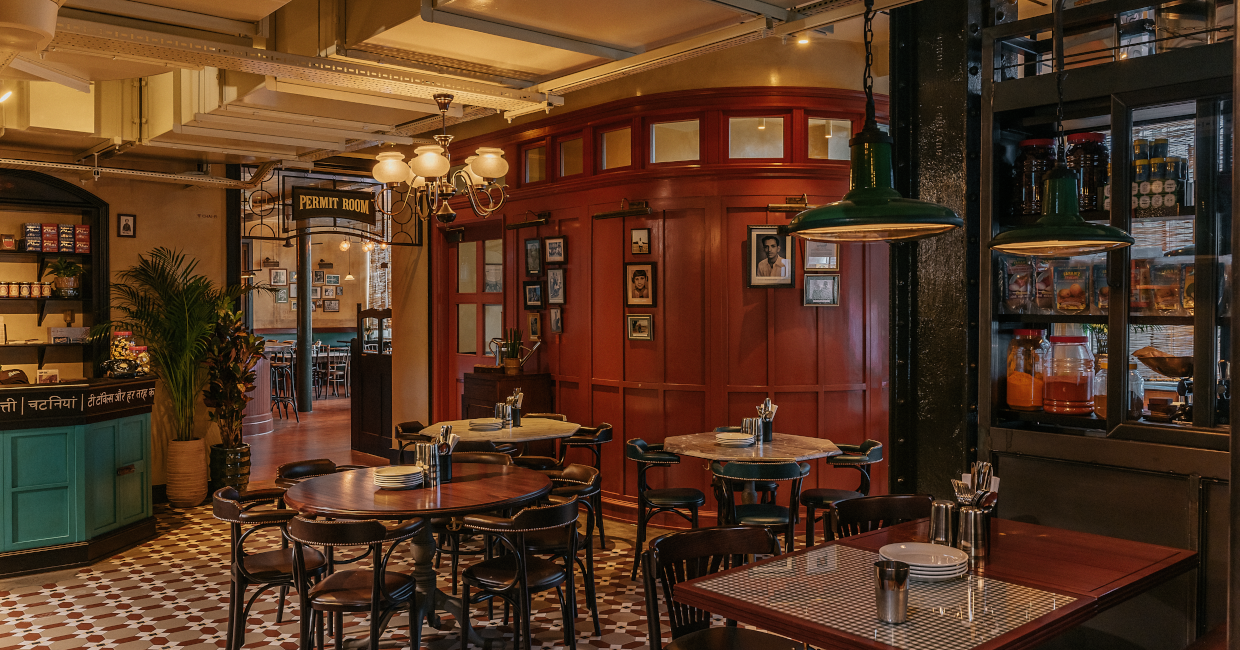

Borough has become the home of Dishoom’s newest cafe, designed by interior architecture and design studio Macaulay Sinclair.
Set within the Grade II listed Hop Exchange on Southwark Street – built in 1867 for merchant hop trading – the 8000 sq. ft. cafe spans two levels and a new covered veranda, comfortably accommodating 290 total covers.
As with every Dishoom design, it starts with a story. Borough’s founding story is set against the backdrop of Bombay’s Crawford Market in 1953; a bustling word of spice vendors, trade and market life, where a Romeo and Juliet-style romance blooms.
At its heart, sits a Diwali-set tale of two young people from opposite sides of the market who fall in love on the one night the whole market comes together. It celebrates the democratic spirit of trading halls – whether in Bombay or London – where class, background and faith briefly fall away over a shared stall.
This narrative provided Macaulay Sinclair with the framework for the design, drawing on the shared Victorian trading heritage of London and Bombay and the improvised jugaad spirit found throughout Bombay’s markets.
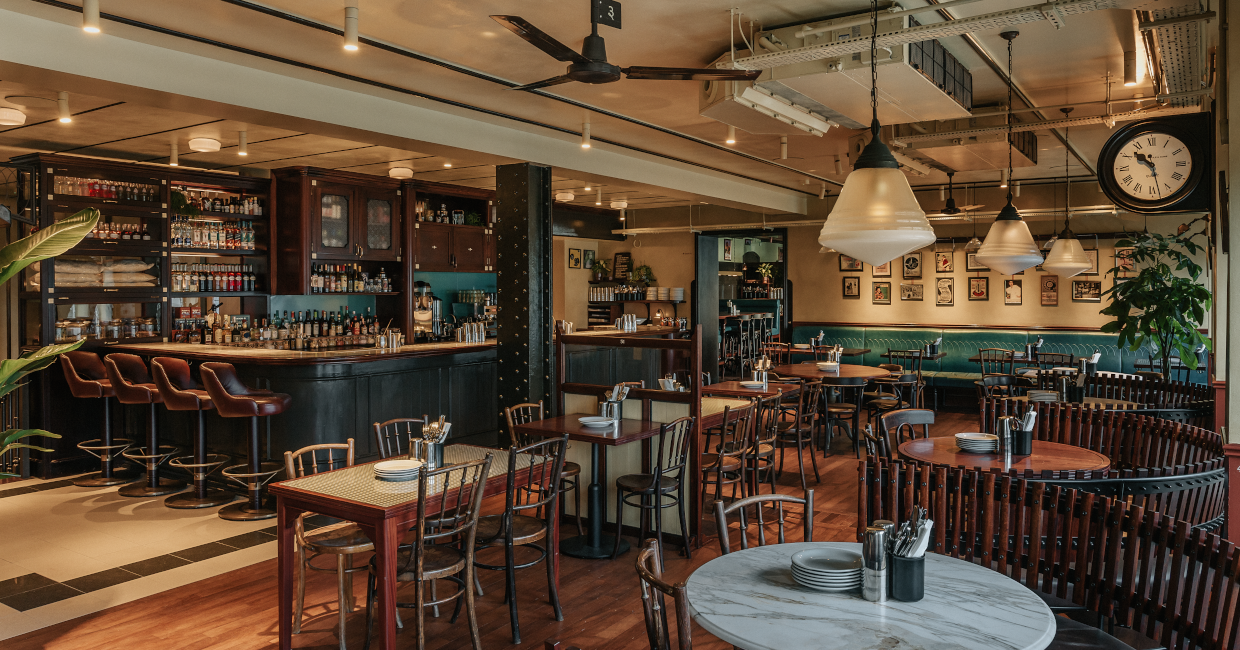
Ian Roome, director at Macaulay Sinclair, said: “The shared commercial heritage between Borough Market and Crawford Market gave us a rich architectural reference point. Bringing Bombay market references into a Victorian trading building allowed us to explore the connections between both places. A lot of what you see comes directly from time spent documenting Bombay’s markets and sourcing original pieces, in the city.”
Throughout the building, an overarching system of forged metalwork defines and connects the spaces, with overhead gantries to support lighting fittings, drawing directly from the ironwork and hanging systems found across Bombay’s markets.
The design shifts across levels; the ground floor reflects the industrious atmosphere of a public trading floor, while the first floor takes on a more refined tone, echoing the private world of market owners and traders.
Specific references are woven throughout the interior; the kitchen pass joinery and glazed display drawers take cues from the Umrigar Stores, a spice merchant at Fort Market.
On the first floor, double-sized back-bar cabinetry nods to B.Merwan & Co., the century-old Irani cafe on Grant Road, while Parsi theatre influences make a subtle appearance in hand-lettered signage.
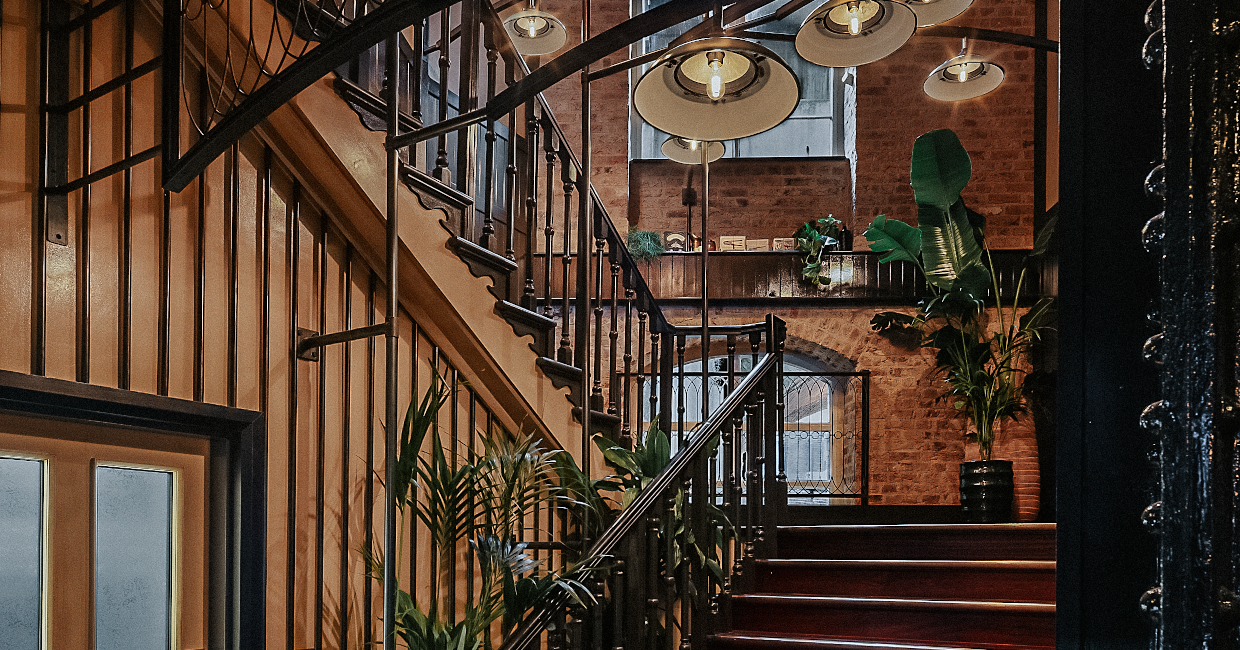
Connecting the levels, metal balustrade details and ornamental timber treads feature on the accommodation stair, derived from Bhatia Mahajan Wadi. Reclaimed mahogany flooring, Minton tile patterns, exposed brickwork and reed-and-bead boarding ceilings offer further detail. More than 30 pieces of original Victorian furniture and early 20th-century light fittings were sourced in Bombay and refurbished for the restaurant fill the spaces throughout.
The process continues an approach developed through Macaulay Sinclair’s long-standing collaboration with Dishoom, where each cafe begins with a fictional narrative in Bombay’s real history and is developed through research, documentation and sourcing.