

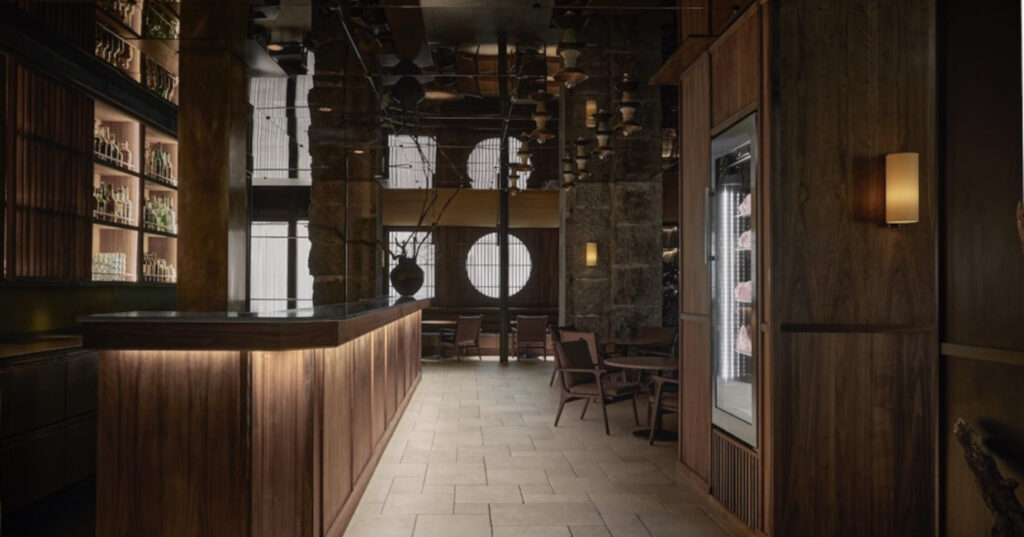

Space Copenhagen has completed the interiors of Kinyōbi, a new restaurant in Copenhagen by Chef Will King Smith, known for Restaurant Goldfinch. Drawing inspiration from the intimacy, material richness and layered energy of Tokyo’s contemporary dining scene, Kinyōbi brings together a refined Japanese sensibility with the quieter rhythm of late-night urban life, balancing clarity, texture and intimacy through careful attention to materials and atmosphere.
The 262 m² restaurant unfolds as a sequence of spaces rather than a single dining room, offering different ways to sit, gather and experience the interior. Each area has its own character yet remains connected by a restrained palette of materials, filtered light and architectural rhythm.
Upon entering Kinyōbi guests first arrive in the bar and lounge. Here, the space feels low, tactile and intimate. Built-in sofas and lounge seating, upholstered in heavy linen and leather, create a grounded softness, while warm walnut panelling absorbs both light and sound, lending the room a calm, almost cinematic presence. Crafted Ren chairs in walnut by Space Copenhagen for Stellar Works introduce a quiet precision to the setting.
Throughout the space, vintage Asian console pieces and sculptural objects have been carefully placed as subtle interruptions within the otherwise contemporary interior language. Their patina and material weight create moments of contrast within the interior, linking naturally to the heavy stone columns of the existing architecture that quietly anchor the space. The dialogue between stone, wood and aged surfaces becomes a recurring thread throughout the restaurant.
The bar runs the length of the space, with its back wall conceived as a large Japanese cabinet. Sliding walnut lamella doors partially reveal a softly lit display of bottles – an understated reference to Japanese craftsmanship and the quiet beauty of concealment and revelation. Extending naturally from the bar, a DJ area with shelves of vinyl records contributes to the experience from the moment one enters. Music is embedded in the space rather than added to it.
The bar and lounge are framed by delicate wooden screens with vertical lamellae, filtering light and views as the interior opens towards the restaurant beyond. This layering allows the spaces to transition gradually rather than feel divided. Above, large pendant lamps designed by Paavo Tynell for GUBI, crafted from hand-stitched bamboo, cast a warm, diffused glow throughout the interior.
Further inside, the restaurant reveals itself around a central, lively, open kitchen. Guests are seated around the kitchen at a counter inspired by Japanese dining traditions, adapted to a familiar dining height that balances proximity and comfort. Above, a suspended structure of paper and walnut reads almost like a lantern hovering beneath the ceiling, casting a soft ambient light over the precise, choreographed movements of the kitchen.
Along the façade, bespoke built-in sofas line the space behind bamboo curtains that filter daylight and soften the link to the street outside. The interior remains connected to the city yet slightly withdrawn – quieter, warmer and more intimate.
Throughout Kinyōbi, the material palette remains deliberately restrained: wood, stone, paper, bamboo, leather and textile – all chosen for their tactility, depth and ability to age gracefully. The interior moves between stillness and subtle energy, between contemporary precision and a timeless sense of craft. References to modern Tokyo sit alongside traces of traditional Japanese interiors, creating a space shaped less by statement and more by rhythm, texture and detail.
Commenting on the design, Signe Bindslev Henriksen says: “With Kinyōbi, we were interested in creating a sequence of moods – spaces that feel calm, fun and alive at the same time. There is clarity in the architecture, but also a softness in how the materials meet, how the light is layered and how people move through it. It’s a place that invites you to stay and enjoy.”
Peter Bundgaard Rützou adds: “From the beginning, we wanted Kinyōbi to feel less like a conventional restaurant and more like a place discovered gradually over the course of an evening. The project was shaped by rhythm, intimacy and spatial flow – balancing openness and enclosure, energy and stillness. Drawing inspiration from contemporary Tokyo, we focused on creating spaces with distinct identities that remain connected through materiality, light and a shared sense of calm restraint. Every detail was considered to support the experience of gathering, dining and lingering late into the night.”
With Kinyōbi, Space Copenhagen continues its exploration of hospitality interiors that prioritise tactility and emotional resonance. The result is a restaurant that feels quietly cinematic – rooted in Japanese references yet unmistakably contemporary Copenhagen in spirit.