

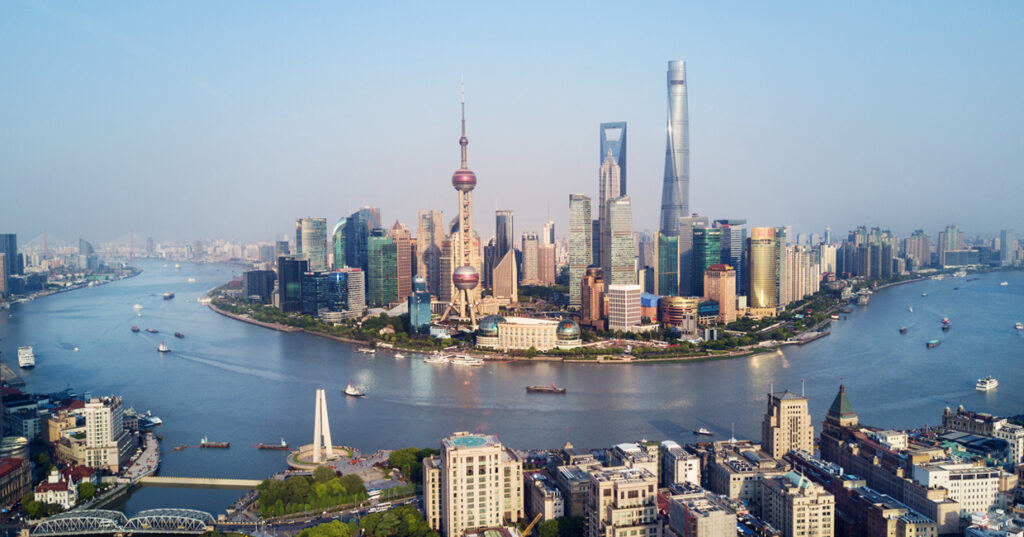

Pictured: Bvlgari Hotel Shanghai
One of the biggest challenges facing luxury brands is becoming and staying relevant for a new generation of clients. Bain & Co. predicts that consumers under 35 will account for more than half of the global personal luxury goods market by 2025. Meanwhile, Chinese consumers, who currently account for one third of the global personal luxury goods market, are expected to make up nearly half of this market by 2025.
Relying on heritage alone is not enough for luxury brands to woo an increasingly younger and diverse clientele. Although storytelling remains critical, innovation will be essential for brands to prove their relevancy.
In 2019, successful luxury brands will need to reinvent themselves by taking inspiration from the values and global culture of Gen Y and Z. At the same time, we can expect to see the codes of hospitality becoming more widespread within the luxury industry as brands strive to build meaningful relationships with customers across multiple touchpoints.
Bringing heritage into the future
While a centuries-old history once played a vital role in the allure of luxury brands, prestigious pasts are no longer as important for present-day consumers. A 2017 Deloitte study of Millennials across the US, UK, Italy and China revealed that “quality and uniqueness” are the top factors attracting them to luxury products. As a result, some of the most successful luxury brands are those that manage to make traditional craftsmanship relevant through modern innovations.
Hublot, for example, has developed a loyal client following for its integration of high-tech materials such as “Magic Gold” (a fusion of liquid gold and ceramic) into the precision of traditional Swiss watchmaking, an approach captured in the brand’s motto, “The Art of Fusion.” The brand has also embraced other technological innovations: in late 2018, Hublot launched the Big Bang Meca-10 P2P, a luxury watch that can only be purchased using Bitcoin.
“A 2017 Deloitte study of Millennials across the US, UK, Italy and China revealed that “quality and uniqueness” are the top factors attracting them to luxury products”
At the same time, the backstory of a brand can add greatly to its uniqueness and value, and knowing when, where and how a product was made has become more important to young global consumers. In order to enable clients to explore the brand’s heritage, Louis Vuitton has developed “Volez, Voguez, Voyagez,” a free 15-room exhibition containing iconic pieces and detailing the brand’s history from 1854 to the present. After opening in Paris, Tokyo, Seoul and New York, in November 2018 the exhibition came to Shanghai, where it displays additional pieces with a particular connection to China
In addition to bringing its past to life for a new generation of clients, Louis Vuitton also reinvents classic pieces with modern innovations, such as the Louis Vuitton Echo, a smartphone-controlled luggage tracker, and the Tambour Horizon smartwatch.
Broadening the luxury brand experience through the codes of hospitality
Hotels continue to offer luxury brands a fresh opportunity to engage clients outside of traditional retail shops or online channels. Although examples of luxury fashion brands branching into hospitality can be found as early as 2000 with the opening of Palazzo Versace Gold Coast in Australia, we can expect this trend to continue as brands strive to offer guests immersive experiences marked by the brand’s own unique traits.
Opened in summer 2018, Bvlgari Hotel Shanghai is one of the newest to this realm and the sixth of Bvlgari’s hospitality collection. The luxury hotel features a contemporary blend of Italian and Chinese style, while its food and beverage offering includes Italian gastronomy and Cantonese haute cuisine.
Future Bvlgari hotels are due to open in Moscow, Paris and Tokyo. Such offerings can help luxury brands to build stronger relationships with clients as consumers increasingly value experiences over material goods.
In Switzerland, luxury watchmaker Audemars Piguet plans to open its bespoke Hôtel des Horlogers in 2020 in Vallée de Joux, a cradle of Swiss watchmaking and the birthplace of the brand. The hotel will enable guests to not only learn more about the luxury brand’s past and present, but also experience the surrounding natural environment in unique ways, including via a sloping rooftop that guests can ski down in the winter.
Delivering premium omnichannel service
In a 2018 interview with Wired UK, Ian Rogers, Chief Digital Officer of LVMH, stated that he finds “digital” to be “a bit of a nonsense word.” He said, “When somebody says, ‘We’re really behind on digital,’ my response is, ‘You’re behind in every aspect of your business?'”
The reality today is that the online experience has become inseparable from the customer journey – and the case of luxury brands is no exception. A 2018 McKinsey report predicts that online luxury sales will more than triple by 2025, with nearly a fifth of personal luxury goods sales taking place online. However, the particular challenge facing luxury brands is how to deliver the premium level of service that clients expect across touchpoints both online and off.
“The reality today is that the online experience has become inseparable from the customer journey – and the case of luxury brands is no exception”
AI-powered chatbots and smart search results can provide online customers with useful product recommendations and a personalised retail experience. Online platforms can also be used to provide luxury clients with the means to customise their own products: Mercedes-Benz lets customers build their own car online. And digital channels can bring customers the same level of service they would have in-store at their own convenience. For example, through the Hublot Digital Boutique, clients can contact sales advisors at their nearest boutique via FaceTime or Skype, enabling them to discover products and speak with the sales advisor remotely. Clients can then follow up with an in-store visit, bringing the online and offline experiences together.
Diversity in luxury: Understanding a new clientele
The shift in the luxury consumer profile has also opened the field to new players in luxury, while putting pressure on established brands to ensure they understand and resonate with their market.
Brands must be culturally aware and avoid alienating consumers through tone-deafness, as Dolce & Gabbana recently experienced in China following its “DG Loves China” campaign, which was criticised for racism and insensitivity and led to the brand’s products being dropped from major Chinese retail platforms.
On the other hand, in an increasingly globalised world, luxury brands can find success by exporting their identity and cultural references. Montblanc, for example, has launched a collection of pens inspired by the illustrations of Le Petit Prince – a unique combination of a European luxury brand and French cultural icon with universal appeal.
Meanwhile, with young customers more focused on quality rather than labels, opportunities are ripe for luxury brands that cater to the diverse values and needs of their clientele. Online luxury retail platform The Modist has built success by focusing on modest fashion, catering to stylish Muslim women as well as non-Muslims. Another platform, 11 Honoré, specialises in plus-size luxury apparel, even encouraging fashion designers to offer a wider range of sizes.
From streetwear and androgynous aesthetics to ethical fashion and other global influences, luxury continues to be redefined and democratised. Global awareness combined with a focus on quality, uniqueness and innovation will be key for luxury brands to keep up.
Dr Nicoletta Giusti is Clinical Professor and Director of the MSc in Luxury Management and Guest Experience at Glion Institute of Higher Education