

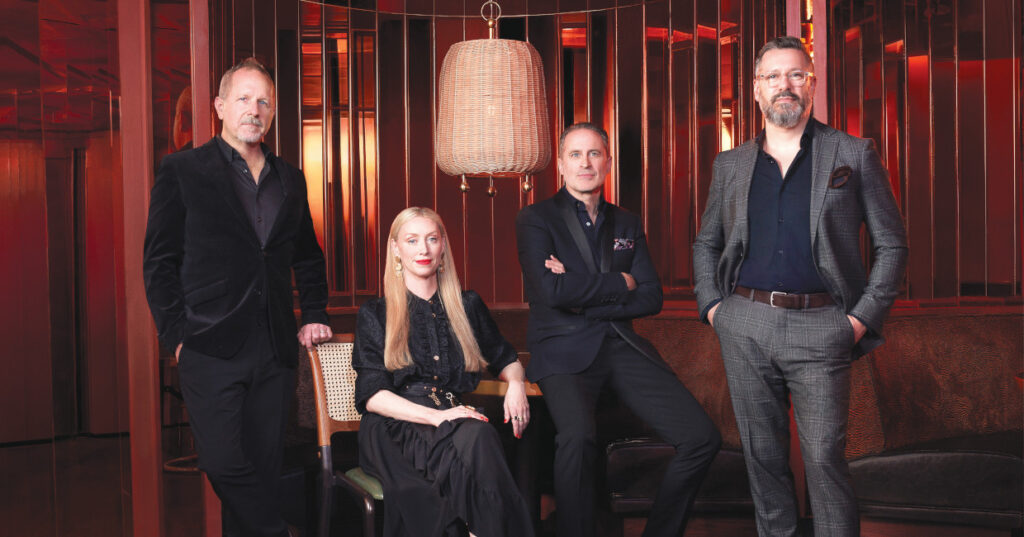

As AvroKO marks 25 years in practice, the internationally renowned studio continues to demonstrate how hospitality design can move beyond aesthetics to create places rich in narrative, character and connection. Through projects such as Six Senses London, the four founders remain committed to an approach that places storytelling at the heart of the guest experience.
Twenty-five years after its founding, AvroKO remains guided by the same principle that brought its four founders together in 2001: the belief that hospitality spaces should tell stories.
What began as a collaboration between four creatives from different disciplines has grown into an internationally recognised design studio responsible for some of the hospitality sector’s most distinctive projects. Yet despite the scale and reach of the practice today, its founding ethos remains remarkably intact.
For Kristina O’Neal, the studio’s origins can be traced to a desire to challenge what hospitality design looked like at the turn of the century. “We started in 2001 with four people, four very different backgrounds including architecture, interiors, art, branding and one shared conviction: that hospitality spaces could carry real narrative and emotional weight,” she says. At the time, she explains, much of what the team encountered felt “clean, safe, generic”. Their ambition was to create something that felt more alive.
That ambition continues to shape the studio’s work today. While AvroKO has expanded globally and diversified its portfolio, the collaborative spirit that defined its earliest days remains central to its identity. Indeed, Kristina suggests that one of the studio’s greatest achievements is not a single project but the endurance of the partnership itself. “The four of us are still here, still genuinely collaborating, still excited about the work,” she reflects. “That’s rarer than it sounds.”
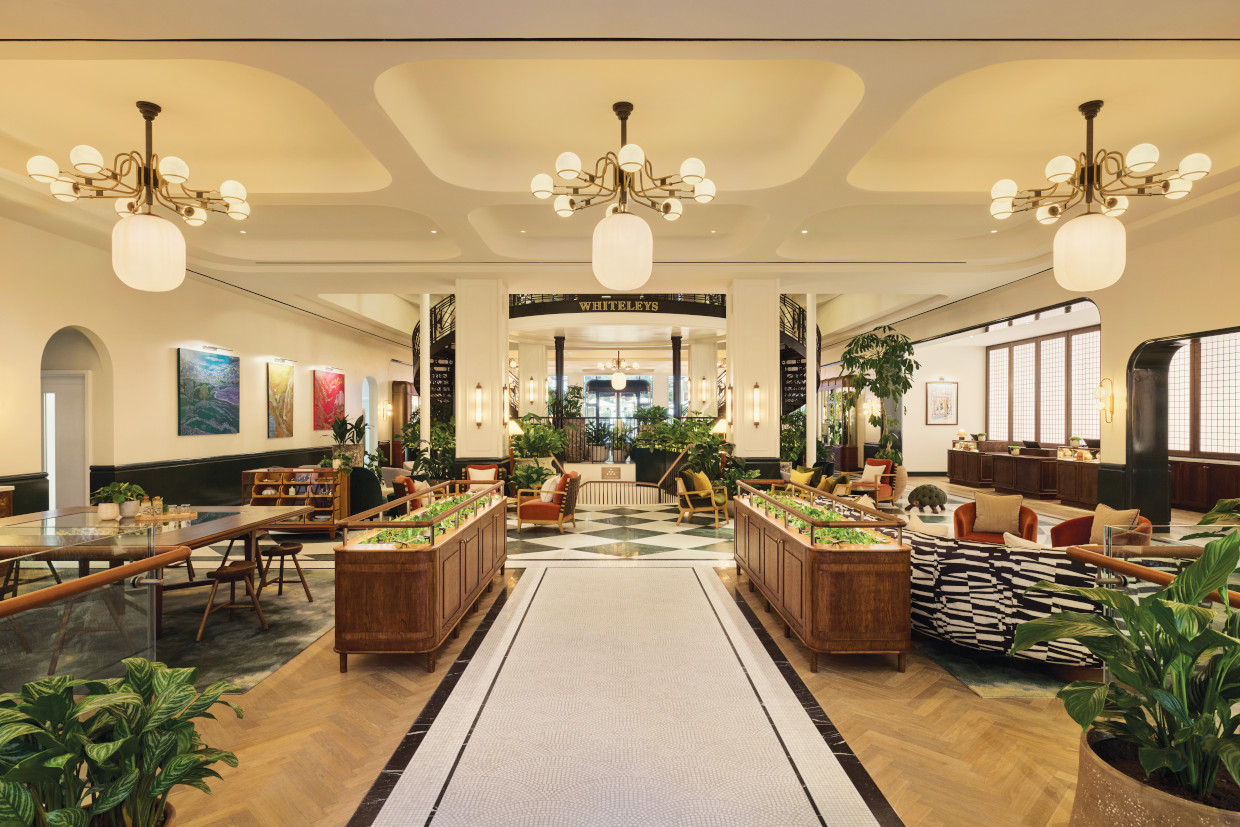
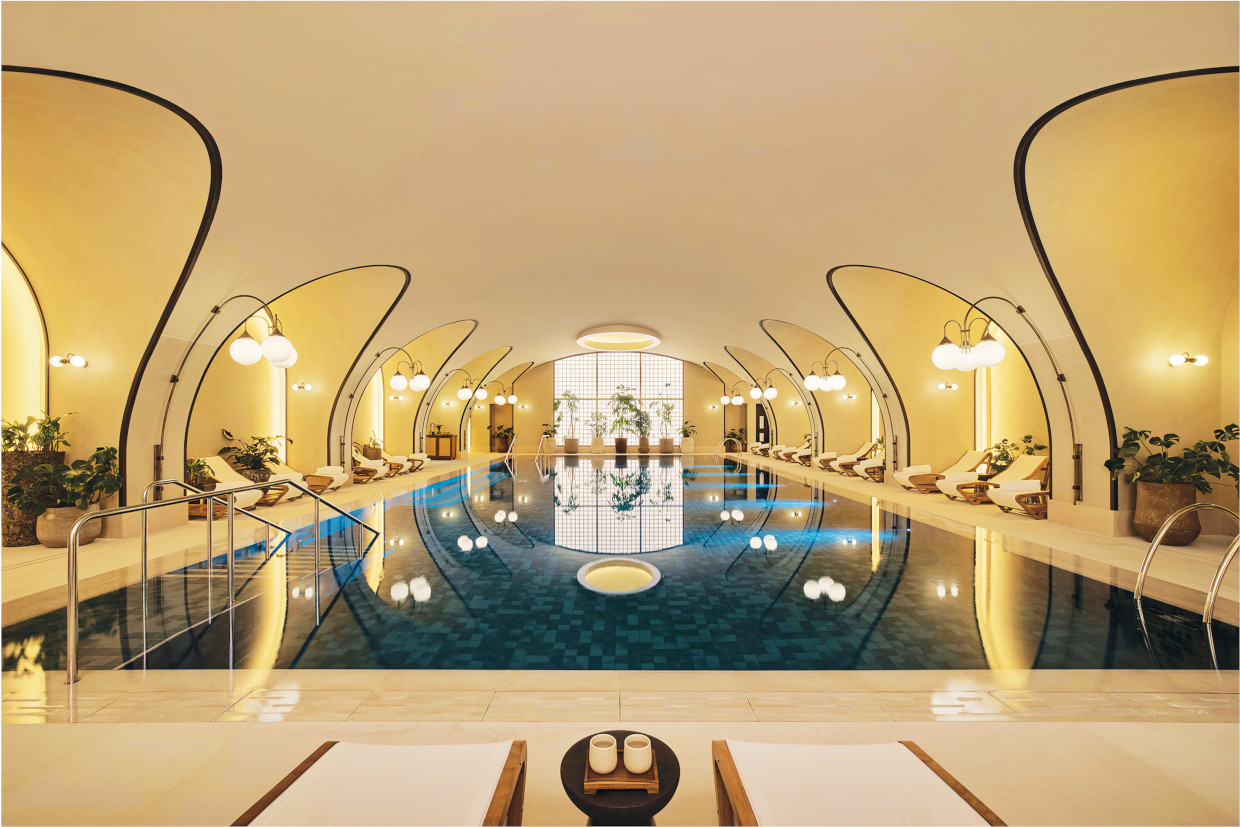
Nowhere is AvroKO’s design philosophy more evident than at Six Senses London, housed within the former Whiteleys department store in Bayswater. Rather than approaching the project as a straightforward restoration, the team sought to imagine an alternative future for one of London’s most storied retail landmarks.
For Adam Farmerie, the starting point was the building’s founder, William Whiteley. Whiteley’s visit to the Great Exhibition of 1851 proved transformative, inspiring his ambition to create what he described as a “Universal Provider” – a place where goods from around the world could be sourced under one roof. “That became the spine of everything we designed,” Adam explains.
Balancing heritage and contemporary design is a challenge faced by many hospitality projects, particularly those occupying historic buildings. For Adam, the key lies in avoiding excessive reliance on the past.
“The main thing is resisting the pull toward pure reverence,” he says. “A building’s history is only a starting point. If you spend all your energy reproducing what was there, you’ll likely end up with a museum versus a living space.”
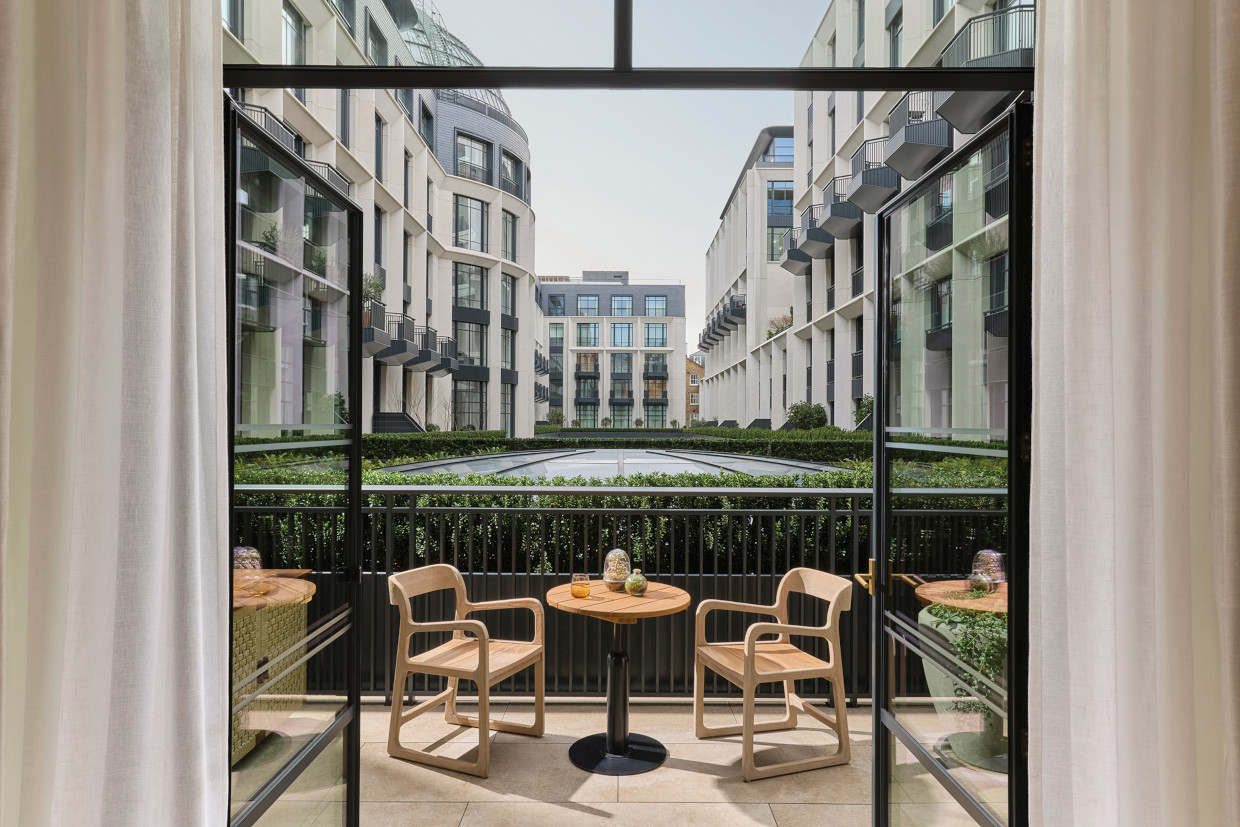
In any city hotel, the guestroom has a distinct role to play – a place of rest and recuperation amongst the hustle and bustle of the outside world. This was a challenge met head on by the team.
“The guest room has to work hardest and possibly shout the least,” Adam notes. “Especially in a city hotel; it needs to be a genuine sanctuary, somewhere that absorbs the energy outside.”
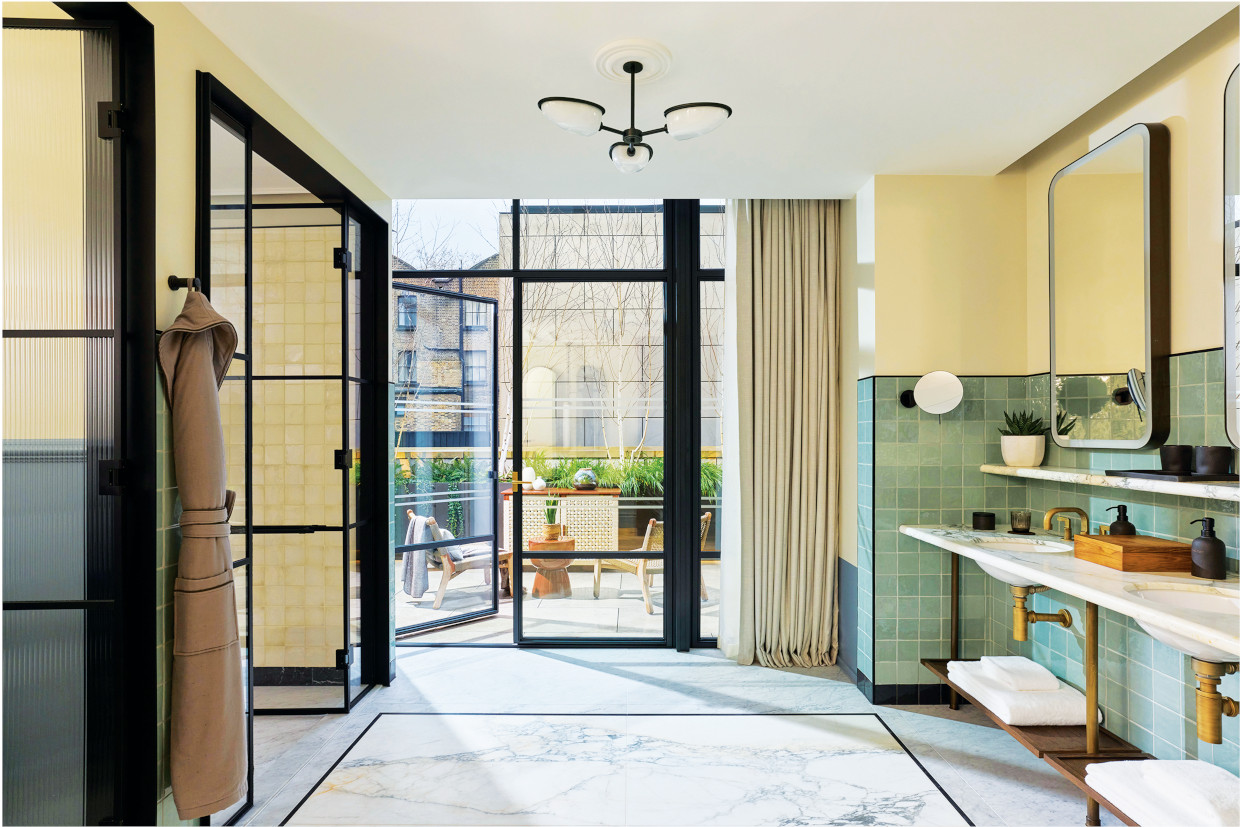
The rooms draw together multiple strands of the building’s story through carefully selected materials and detailing. Handmade Zellige tiles reference the character of the former basement vaults, while wardrobe millwork and glazed shower enclosures subtly recall the building’s retail heritage. Chevron flooring and generous cove mouldings introduce a more residential quality, echoing the upper levels of the building. Throughout, material richness is balanced by restraint, creating spaces that feel considered rather than decorative.
Lighting plays a particularly important role. Designed to work in harmony with natural daylight and support circadian rhythms, it reflects the wellness-led principles that distinguish the Six Senses brand. It is a reminder that contemporary hospitality design increasingly extends beyond aesthetics to encompass wellbeing and experience.
That same long-term perspective informs AvroKO’s approach to sustainability. Rather than focusing solely on technological interventions, the studio places significant value on durability and longevity.
“The most sustainable decision is one you don’t have to make again in ten years,” Adam explains.
At Six Senses London, this thinking is reflected in the extensive use of marble, stone, timber and handmade tiles – materials chosen not only for their beauty but for their ability to age gracefully. Rather than deteriorating through use, they acquire character over time. Natural light is also drawn deep into the building through the use of atriums and glazed elements, reducing reliance on artificial illumination while enhancing the quality of interior spaces.
Looking ahead, AvroKO sees hospitality environments becoming increasingly multifaceted. As the boundaries between hotels, workplaces, social spaces and private clubs continue to blur, designers are being asked to create more complex ecosystems.
“The next level hospitality projects we see now are less like hotels and more like small neighbourhoods,” says Greg Bradshaw. Restaurants, wellness facilities, retail, art and community programming are increasingly expected to coexist within a coherent design vision.
This evolution demands a broader way of thinking. Rather than focusing solely on individual rooms, designers must consider how an entire environment functions across different times of day and for different types of users. The most successful destinations, Greg suggests, will be those that establish authentic connections with their communities. “The hotels that will matter in twenty years are the ones that feel genuinely rooted in their communities.”
The emphasis on authenticity and narrative extends beyond AvroKO’s projects and into its advice for the next generation of designers. For Kristina, curiosity remains far more important than stylistic trends. She believes the strongest hospitality designers are those who become immersed in the stories, cultures and histories that shape a place, rather than focusing solely on aesthetics. “Start with curiosity, not aesthetics,” she says. “The designers who make lasting work in this field are the ones who became genuinely obsessed with the stories, cultures, and histories embedded in the places they were designing.”
Equally important, she suggests, is the ability to collaborate. Hospitality projects bring together architects, operators, developers, chefs, strategists and craftspeople, making openness to different perspectives essential. The best ideas, she adds, rarely emerge from a mood board alone. Instead, they come from experience: spending time in places, observing how they are used and understanding how people connect with them. It is an approach that mirrors AvroKO’s own practice, where storytelling begins not with a concept, but with lived experience.
As AvroKO enters its second quarter-century, there is little indication that the studio is slowing down. Recent openings include The Ilisian in Athens and Shangri-La Kunming, while future projects range from The Selvedge in Healdsburg to Pendry Mexico City and LXR Rome.
For William Harris, the diversity of the direction of the studio is a reflection of their continuing curiosity. “We’re also working on the first Wolesley outside of London, which feels like a real privilege. Twenty-five years in and the pipeline has never felt more diverse and exhilarating,” he says.
It is perhaps fitting that a practice built on storytelling remains focused on what comes next. While individual projects may vary in location, scale and style, the underlying narrative remains remarkably consistent: design that is rooted in history, animated by imagination and created to be lived in rather than simply looked at.