

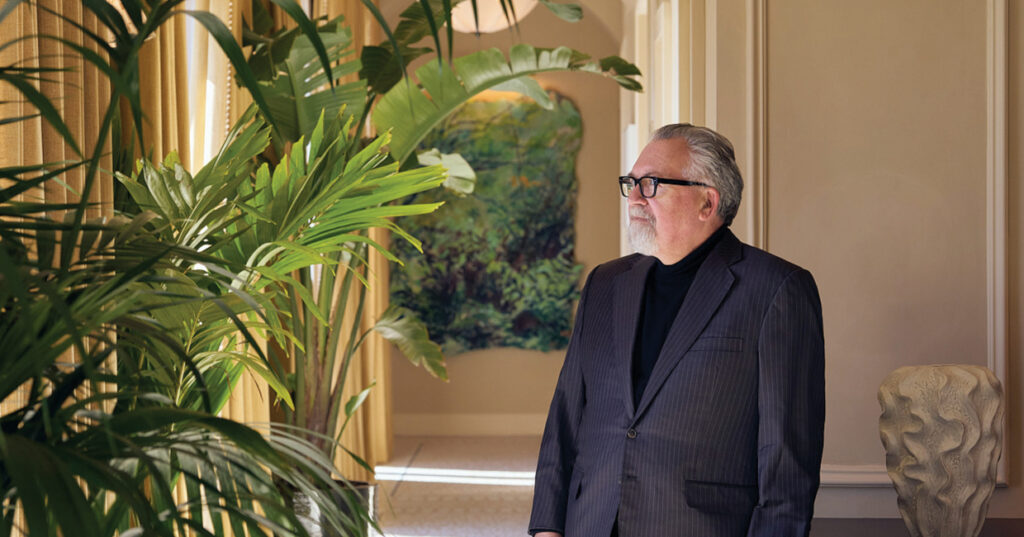

With more than four decades of experience, Paul Taylor, President of Stonehill Taylor, has witnessed a fundamental shift in the way hotels are conceived, designed and experienced. He spoke with Hospitality Interiors Editor Vicky Doe about the importance of place and narrative, designing for inclusivity, the relationship between architecture and interiors, and what the next decade could hold for hospitality design.
You’ve described your route into architecture as a combination of art and science. How has that balance influenced your design philosophy throughout your career?
My background in art, science and maths still shapes how I think about design today. Art gave me an instinct for atmosphere and feeling, while maths and science taught me to solve problems methodically and with precision. A well-designed structure must encompass all of these principles. It needs to move people emotionally, but it also has to function soundly and smoothly, and serve the very people who use it every day. I, along with my team, aim to bring that focus on duality to every design, because that’s what produces work with real staying power.
You joined the practice in 1980, long before it became Stonehill Taylor. How has the studio evolved over the past four decades, and what lessons have shaped its approach to hospitality design?
When I joined our predecessor firm, Lundquist & Stonehill, in 1980, we were a true general architecture practice, working across everything from residential and commercial projects to museum exhibition design. We didn’t set out with a plan to become a hospitality firm. Over time, though, we found ourselves drawn to hotels because it’s one of the few sectors where great design and business success are so closely linked. Creating a better guest experience is good design, but it’s also good for the client.
That evolution shaped a lot of our thinking and shifted our focus beyond the building itself to theguest experience, atmosphere and the ways people interact with a space. One lesson that’s stayed with us is the importance of looking at architecture and interiors as one integrated experience rather than separate disciplines. I think that’s one thing that sets us apart. We’ve always built our practice on being fluent in both, and that fluency has become one of the clearest lessons of the last 40 years.
You have said that every project begins with an understanding of place, culture and how people experience a space. Why is this approach so important, and how do you uncover the story of a destination?
I believe that to truly understand the story of a place, you have to approach it on its own terms rather than trying to fit it into a preconceived design mould. The story of a place rarely announces itself right away. You uncover it by paying attention to the details, the rhythm of a neighbourhood, its history, the local culture and the ways people already live and work there.
I always say a building should be a good neighbour. This philosophy goes for both existing structures and new builds. Discovery shapes everything from the guest experience to the design decisions we make along the way. If you skip that step, you risk creating something that could exist anywhere, and that’s the opposite of what we’re aiming for.
How does that philosophy influence your approach to creating hospitality environments that are accessible, inclusive and welcoming for every guest?
Once you understand a place and the people who experience it, creating a welcoming environment becomes much more intuitive. When we’re designing hospitality spaces, we think about the wide range of guests who will experience them and how their needs may differ. That means building flexibility into the design from the start, whether that’s creating spaces that serve different purposes throughout the day, integrating ADA-accessible features into historic buildings, or even designing custom solutions like a hydraulic lift tabletop at a bar for wheelchair users.
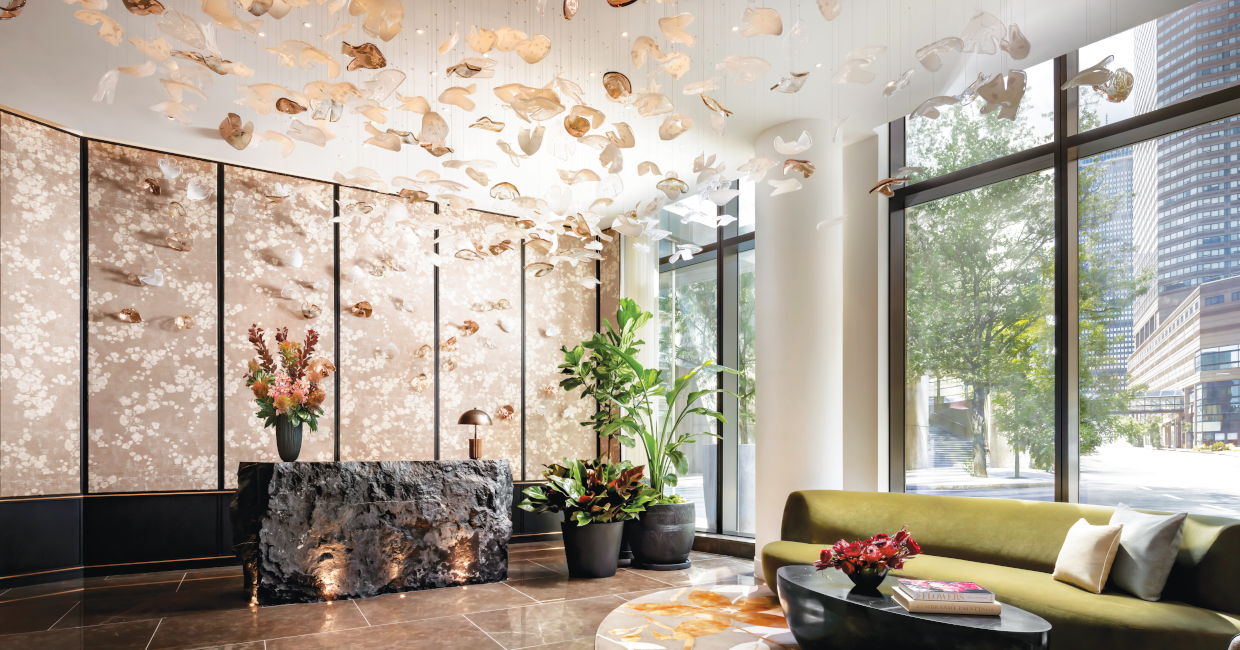
It’s important to us to keep the soul of the place while still making sure everyone can experience it. At the same time, inclusion isn’t just about functionality. People feel more comfortable when a space feels authentic to its setting. For Raffles Boston, for example, we drew inspiration from the city’s history, including America’s first botanical garden and the historic Revere Copper Company, to create a connection to local landmarks and a sense of belonging for guests.
Narrative is central to your work. How do you translate a story into a hospitality environment that feels authentic rather than simply decorative?
The risk with narrative-driven design is that it can become thematic, where a story gets applied to the surface of a space rather than built into its bones. We let the story guide our approach to concept, proportion, materiality, spatial flow and the use of light before even thinking about decorative elements.
How that translates into the design depends on the character of the project, but the goal is always authenticity. For Ned’s Club Washington, DC, part of our inspiration came from differenteras of iconic White House design. We intentionally avoided being too literal – no framed photos of past presidents or obvious historical references. We incorporated more subtle touches, from bold striped wallpaper inspired by the Obama-era interiors to murals that nod to the Sister Parish-designed President’s Dining Room from the Kennedy years. We’re firm believers that the strongest hospitality environments allow guests to feel a story rather than read it off the walls.
You’ve been instrumental in creating an integrated approach where architecture and interiors work together. Why is this collaboration essential to delivering a successful guestexperience?
Guests don’t distinguish between where architecture ends and interior design begins. They just feel whether an atmosphere works or doesn’t. When those two disciplines are designed in isolation, it can create seams: a beautiful façade with an interior that doesn’t relate to it, or a stunning interior that contradicts the logic of the building around it.
Keeping architecture and interiors under the same umbrella means that we understand how they can enhance each other, and that’s what allows the guest experience to feel seamless. We bring this mindset to every project, whether our architecture and interior design teams are working together or collaborating with outside partners.
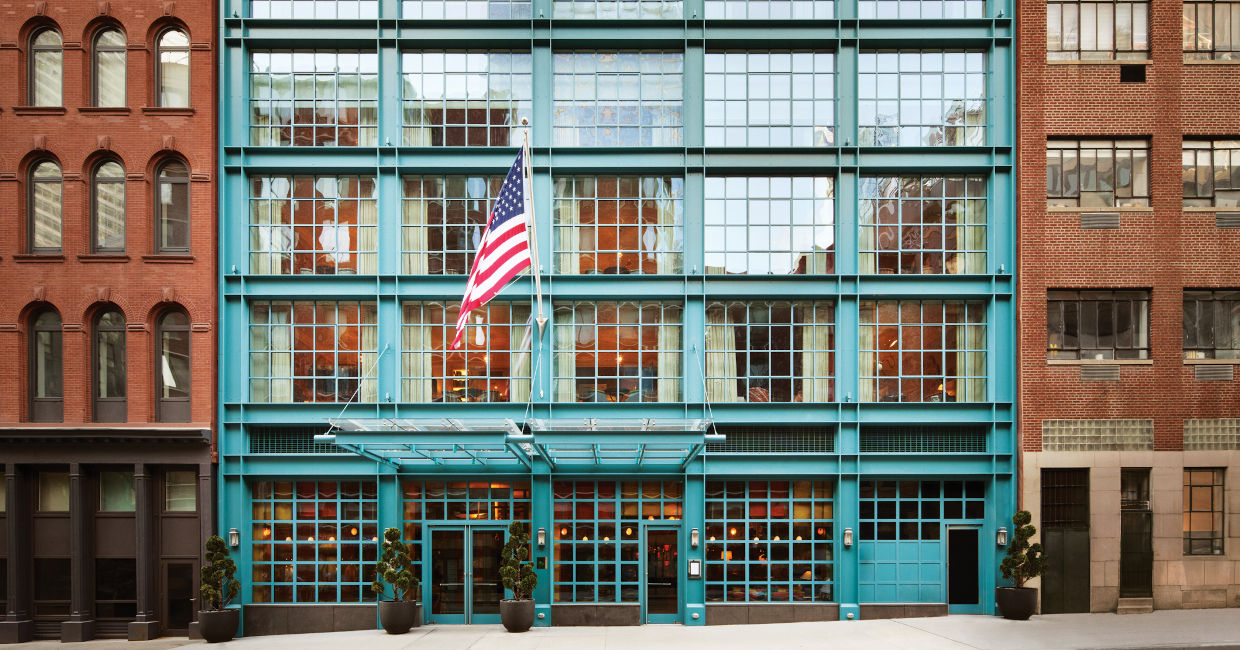
For our three Firmdale Hotel projects in New York City – The Crosby Street Hotel, The Whitby and The Warren Street Hotel – we wanted to create architecture that complemented, rather than competed with, Kit Kemp’s distinctive interiors. At The Warren Street Hotel, for example, the building’s form references the industrial history of the surrounding neighbourhood, while its iconic bright blue façade reflects the eclectic character of the interiors. It’s that push and pull, the balance between architecture and interiors, that we’ve found is essential to creating a memorable guest experience.
Your portfolio includes a wide range of hospitality projects, from heritage buildings to new developments. How do you ensure each project has its own identity while remaining true to its location and culture?
Heritage buildings and ground-up developments have very different demands, but the discipline is the same in both cases. With an existing building, such as San Vicente West Village, Graduate Princeton or The Wall Street Hotel, our job is to listen to what’s already there and identify the qualities worth amplifying rather than overwriting.
With new construction projects like the Troutbeck Cottages and Warren Street Hotel, it’s about building that sense of place through research and a deep understanding of the site’s history, culture and context. In either case, we try to design with an ‘only-here’ approach. We believe a project’s identity should grow out of its location and culture, not be imposed on it – again, there’s that ‘good neighbour’ philosophy. This is how any two of our projects can have a distinct character and look, while both reflecting the values and design thinking that define our portfolio.
Guest expectations continue to evolve. From your perspective, what are today’s travellers looking for from a hotel that they weren’t looking for 20 or 30 years ago?
Twenty or 30 years ago, a hotel’s job was mostly transactional: provide a clean, comfortable room with a functional lobby to pass through. Today’s traveller looks for a hotel to double as a destination, whether that means a place to grab coffee, work for an afternoon or meet friends for a drink, even if they aren’t staying overnight.
Connection is the key, and hotels are increasingly considering how their public spaces can cater to this. Guests aren’t just looking for a comfortable place to sleep anymore; they’re askinghow a hotel fits into their daily patterns, wellness and lifestyle. At the end of the day, though, I think the best hotels succeed for the same reasons they always have: they help people connect with a destination while making them feel at home.
Looking ahead, how do you see hospitality design continuing to evolve, and what do you think will define a successful hotel in the next decade?
I think the next decade will be defined by how well hotels handle less space, rather than more. Increased real estate pressures in cities mean guest rooms will likely only get tighter, and the firms that succeed will be the ones that treat that constraint as a design opportunity, not a limitation.
I look at it as ‘capsule luxury’, where a room feels generous and considered despite having a smaller footprint. Along with that, I expect the amenity spaces around the room, such as wellness offerings, social areas and the F&B programme, to keep growing in importance. A hotel’s success will increasingly depend on the full experience from sunup to sundown, not just the room alone.