

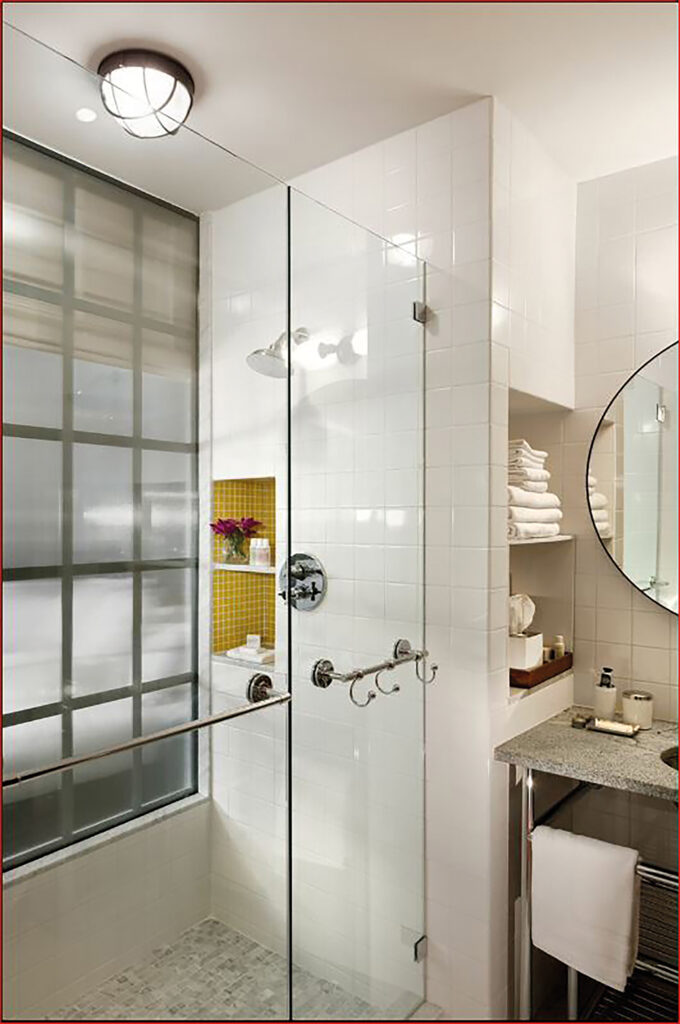

Lighting has the potential to profoundly transform the hospitality experience – it can project and enhance the character of a venue, mould itself to the needs of an individual, and even enhance our sense of wellbeing. With advances in technology, and particularly the development of LED technology, come vast new opportunities for inspirational, innovative lighting scemes within hospitality spaces. Here, our expert panel – Robert Sonneman, founder of SONNEMAN – A Way of Light; Renée Joosten, lighting design director at ICRAVE; and Beatrice Witzgall, founder and CEO of LumiFi – share their projections for the year ahead …
Could you explain a little about your background in lighting design, and what first sparked your interest in this sector?
Robert Sonneman: Three days out of the navy at age 19, I answered an ad in the NY Times to work as the sole employee for lighting retailer, George Kovacs. Although my parents were in the lighting business, they came from a traditional perspective, and Kovacs introduced me to the European notion of Modernism.
It was an awakening and I was immediately captured by the European minimal modern perspective, from the Bauhaus industrialism to the sensuality of the Danish modern forms.
With an art background in high school and exposure to manufacturing in my father’s factory, the connection between art and design became my focus and my passion. Lighting was the medium, but functional product design became the core of my design essence and lifelong pursuit.
I later extended that background to architecture and many other products from furniture to appliances, but lighting was always at the centre of my practice. Lighting is the most diverse, infinitely interesting and challenging activity. It requires knowledge in such a broad range of materials, processes, technologies and disciplines.
Renée Joosten: I received my BA in Interior Design at the Royal Academy of Art in The Hague, the Netherlands.
During my studies and later on in my work as an interior designer, I became aware of the importance of light and its impact on our perception and experience of space.
I was eager to learn more about lighting and went to New York to obtain an MA in Architectural Lighting at Parsons, The New School. Studying at Parsons deepened my passion for lighting, and I have been practicing lighting design since.
Currently at ICRAVE, my background and experience allows me to implement a cohesive approach between interior and lighting design, embodying ICRAVE’s philosophy of merging disciplines to create holistic, multifaceted immersive design experiences.
Beatrice Witzgall: I am a trained architect, lighting designer and former digital media teacher from Germany. I’ve always been driven by the rapidly expanding and diversifying areas of architecture and technology. I also hold a Masters of Architecture from the University of Braunschweig, Germany and have attended the graduate programme in architecture at the Rhode Island School of Design.
In 2014, I saw an opportunity to rethink the wired lighting control industry based on the possibilities of IoT and wireless lighting and developed LumiFi in order to bring sophisticated yet smart lighting to the world.
I’ve always been interested how lighting technology changes the way we interact with space and how it affects people. Lighting can easily transform space within an architectural toolset. For example, lighting can enhance textures and change the identity and atmosphere of an interior environment. It can also set the tone of a person’s mindset, wellbeing and emotional state.
What sparked my interest in the lighting sector was how lighting can help create interactive spaces, which is a great tool to provide an impactful experience, one that can adjust to an individual’s wants and needs. In addition, lighting can be controlled and be made responsive and dynamic to our needs and activities.
What would you describe as the guiding philosophy behind your designs?
RS: I am a functional Modernist. I am inspired by the compelling logic of a good idea well executed with simplicity and clarity of purpose. Striving for that beautifully executed simplicity in a functional object often leads to an object of artistic expression and value.
Most of us trained in my era are Miesian disciples rooted in the Bauhaus ideal of minimalism. Architecture is the design foundation of an era or of a cultural point of view, and is at the root of my insight into design.
RJ: At ICRAVE, lighting is an inspiration and truly interwoven within the design and experience of space. From concept to design implementation, lighting plays a front role in the design – it’s never an afterthought.
Light, even though not always consciously perceived, is our medium to tell the story of the design.
BW: For each project, I place a lot of emphasis on the design logic, language and character of space. Every project has different clients, needs, designers, locations, budgets and so forth; therefore each requires a different lighting language to carry forward the character and personality of a project, while also supporting and enhancing it.
Years ago I worked with Frank Gehry and Steven Holl in parallel. Working with these individuals, I realised that there was such a remarkable shift in their design objectives.
For Frank Gehry, we exposed all fixtures and made them surface-mounted as he wanted to show the technical and sculptural character. However for Steven Holl, we used a lot of indirect and ambiant lighting and intentionally made the light fixtures as though they were invisible.
You must be consistent with the overall objective of the lighting project, while satisfying the client’s wants and needs – as varied as they may be from project to project.
When creating/designing lighting, to what degree do you anticipate emerging trends in the hospitality industry?
RS: For me this is the dawn of the place I always wanted to be in creatively, because technology has burst open the possibilities of imagination. The applications of technology in my designs may, but do not necessarily, anticipate emerging trends in the larger industry.
I do not look at style trends as a basis of my aesthetic but rather to anticipate the application and technology that are needed to serve the utility. Our Hospitality team comes to me with a specification or job requirement, and often a description of the designer’s vision and requirements.
Our job is then to realise that vision with a modern perspective that meets the functional requirements with a well-executed design.
RJ: Part of trend forecasting is building from experience, the other part is following the latest technology and seeing where they meet the parameters for a project. Especially the development of the technology of LEDs – technological advances and new capabilities are happening fast, and the small form factor of LEDs offers new design opportunities that before were not possible with traditional light sources.
BW: In hospitality, creating mood and atmospheres is our foremost priority. We need to create a feeling in the space. Lighting technology is currently going through one of its largest transformations, something very exciting.
With the emergence of LEDs, colour changing as well as white tunable lighting and their controls have become a big topic. Any dynamic lighting source requires control, and while these LEDs have great potential, they are very hard to operate and fulfill their potential without proper control.
We’re diving into a phase where we’re exploring the use of colour to enhance environments for individuals and more so than anything else. For example, there are studies on how lighting can affect your biological hormone production.
Researchers are studying how circadian light bulbs are affecting individuals today. It’s important to pay attention to this trend looking at the emotional and mental impact that type of lighting technology has on individuals within an interior space.
Lighting Controls are a major player within the hospitality industry today. They essentially adjust to our preferences and activities throughout the day, such is the case in hotels.
When it comes to Legacy Lighting controls, they are complex in terms of operation, since it requires experts and third party consultants, but IoT-enabled controls provide simplistic accessibility and additional features. This is a very exciting time and new opportunities are opening up.
What do you feel will be the most important lighting trend(s) for the hospitality sector in the coming year?
RS: Hospitality is not about just selling space but about providing positive experiences that guests embrace as rewarding, comfortable and convenient. Lighting affects every part of that experience; we see what we light. It impacts our mood, our perception and our memories of the experience.
Downlights improperly placed or overpowered in a dining environment create shadows and high contrast that cause discomfort and raise anxiety.
Reading lights near the bed need to be convenient, glarefree, and usable without interfering with a partner’s activity of watching TV or sleeping.
Lighting is at its infancy in terms of its next wave of evolution. Integration is the key to the evolution of lighting science. No longer generated by burning fuel or filaments, lighting is provided by exciting electronic signals to produce luminous energy.
Once we understand that electronically-generated illumination is a wave in the spectrum of energy we can control, illumination as a component of a broad-based integrated system of energy can be deployed across multiple applications.
Our electronically managed information, communication and entertainment will include the quality, colour, intensity and mood of illumination as a synchronous component of a controlled environment.
RJ: LED lights will continue to rise as a trend in the hospitality sector, especially in concordance with better dimming technology and more intuitive control systems.
The quality of both dedicated, built-in dimmable LED modules and LED replacement lamps will continue to improve while the initial cost is reduced. Creative use of LEDs focusing on its small, unique form factor will lead to even more decorative LED fixtures on the market, meaning this lighting trend is sure to grow in 2016.
BW: Dynamic lighting such as colour-changing and circadian rhythm-supporting light sources will become the most important lighting trend we will see in the coming year.
The new IoT-enabled lighting controls will become smarter, more accessible, easier to use and reasonably priced. loT lighting can be interactively controlled through a smartphone. This is a huge shift from how we have been interacting with lighting in the past.
How do you feel technology, and particularly LED lighting, has impacted on lighting design for hospitality settings, and what do you foresee its impact will be on the future of lighting design?
RS: Technology has allowed us to completely reimagine the form factors, scale and application of luminaires. Because of LED technology, we are no longer required to create a base and separate a shade to house a large heat-generating bulb. Innovative and often artistic forms and light sculptures, in a variety of materials, can be rendered in exciting new ways.
RJ: The development of LEDs has been remarkable. Currently there is a wide variety of LEDs with a high CRI (Color Render Index, an indicator of how LEDs render colours especially noticeable for red) that are available in warmer colour temperatures, such as 2700K, to create inviting environments.
Initial cost has come down, and with their long lamp life it reduces maintenance costs significantly compared to other sources such as compact fluorescent and incandescent.
For the future, I see more focus on optimising the individual guest experience by offering intuitive, flicker-free, personal controls, and also implementing newer LED options such as dim-to-warm LEDs and tunable white LEDs. Dim-to-warm LEDs become more amber when they dim down, mimicking the incandescent dimming curve, while tunable white LEDs, initially developed for healthcare applications, allow the user to dial in a crisper white light in the morning and a moodier, warmer light in the evening.
The tunable white LEDs can be particularly influential because they can reduce travel jetlag when tuned with guests’ natural circadian rhythms. We can only expect LED advances and their proliferation in the hospitality industry to grow.
BW: LEDs allow for flexibility you could have dynamic lighting with colour-changing elements within the source. Thanks to technology, LED lighting can be easily controlled through a smartphone, unlike other light sources designed for the hospitality industry.
As individuals become more familiar with the power of smart LED lighting, designers will become able to design dynamic ways to customise solutions that answer the wants and needs of the industry. The future of lighting and its responsive and organic ways will soon benefit the lives of individuals active in a space.