

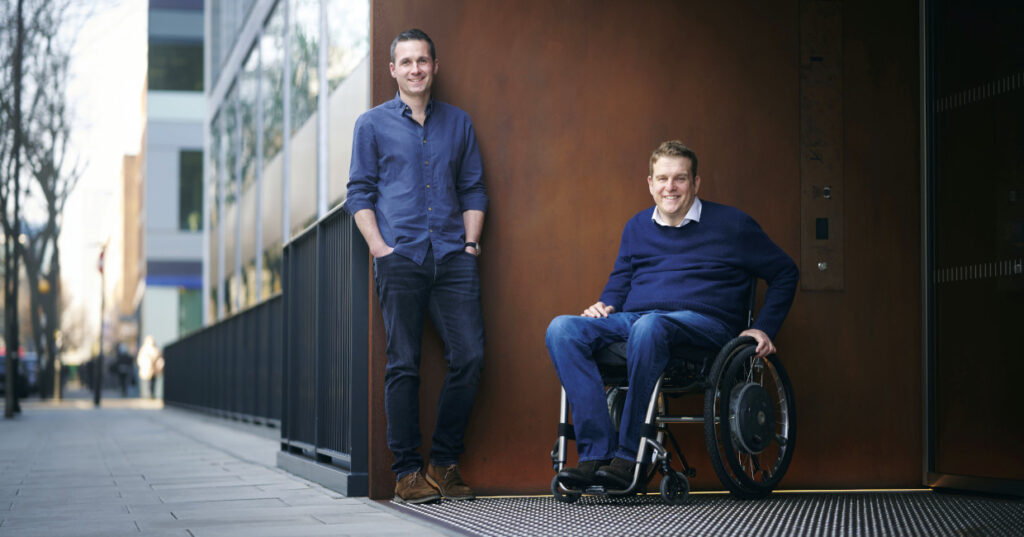

Accessible design should never mean compromising on aesthetics. Motionspot founder Ed Warner spoke with Hospitality Interiors Editor Vicky Doe about designing for a broader range of guests, why accessibility needs to be considered from the earliest stages of a project and how better design can create better hospitality experiences for everyone.
For Ed Warner, truly accessible hospitality starts with a simple ambition: removing the barriers that can make navigating and experiencing a hotel, restaurant, bar or café unnecessarily difficult.
“Truly accessible and inclusive hospitality is all about removing the barriers that cause undue separation and stress for people within any hospitality environment,” he explains.
Yet one of the biggest challenges facing the industry is understanding just how broad those requirements can be. Accessibility is still frequently associated primarily with wheelchair users, but Ed argues that designers need to consider a much wider spectrum of physical, cognitive and sensory needs.
“There is a belief in the industry that the majority of disabled people are wheelchair users, but in reality, only 7% of disabled people are wheelchair users,” he says. “Accessible hospitality to me is all about designing for the 7% of wheelchair users, but also the 93% of people who may have another physical, cognitive or sensory need, and ensuring that all of our environments are equitable and accessible for everybody.”
It is an approach that sits at the heart of Motionspot, which was founded in 2012 following the experience of Ed’s friend and co-founder James, whose home began to resemble a hospital after he sustained a spinal cord injury in a diving accident aged 25. It prompted the pair to question why accessible products and environments so often appeared clinical, and whether functionality and aesthetics could instead work together.
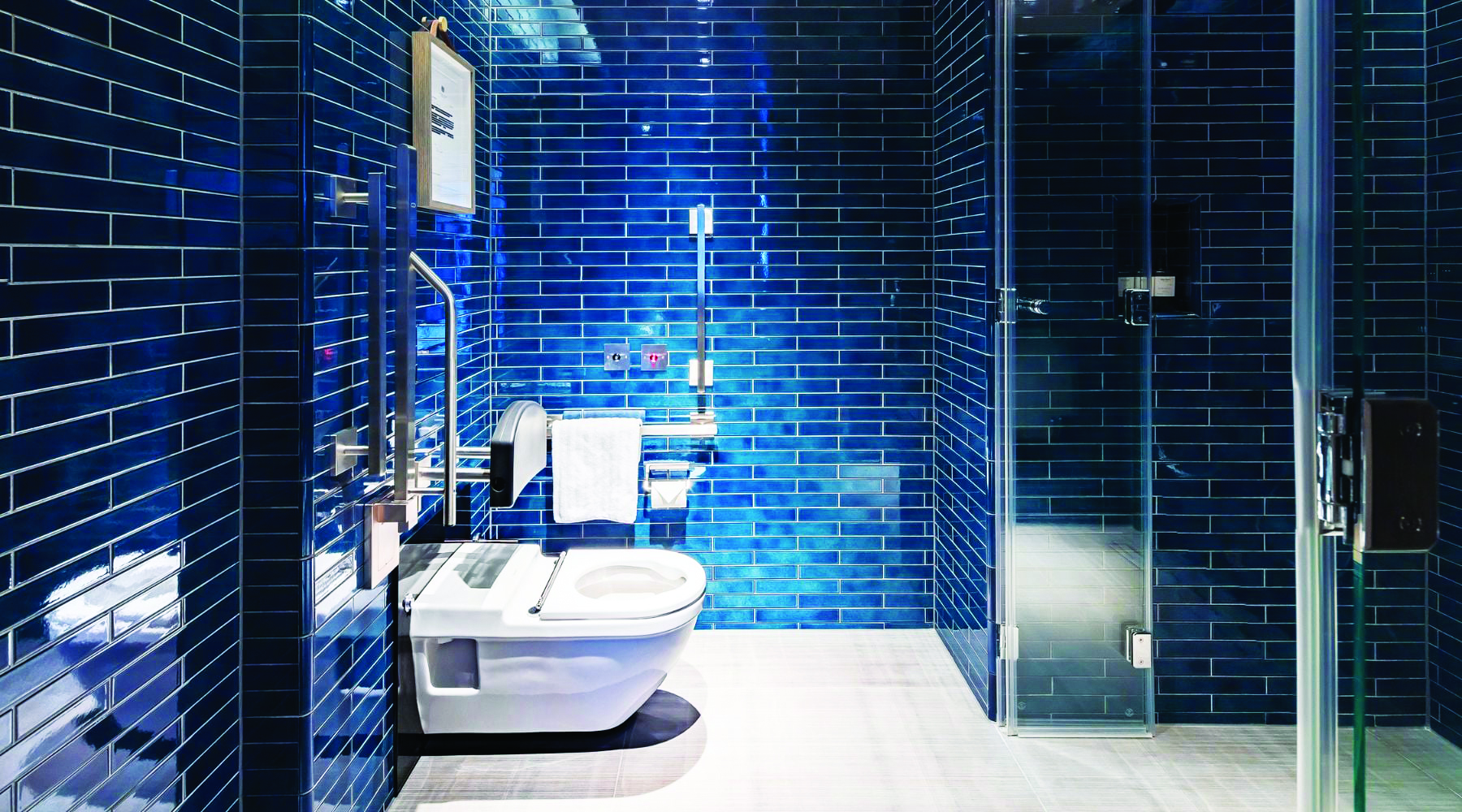
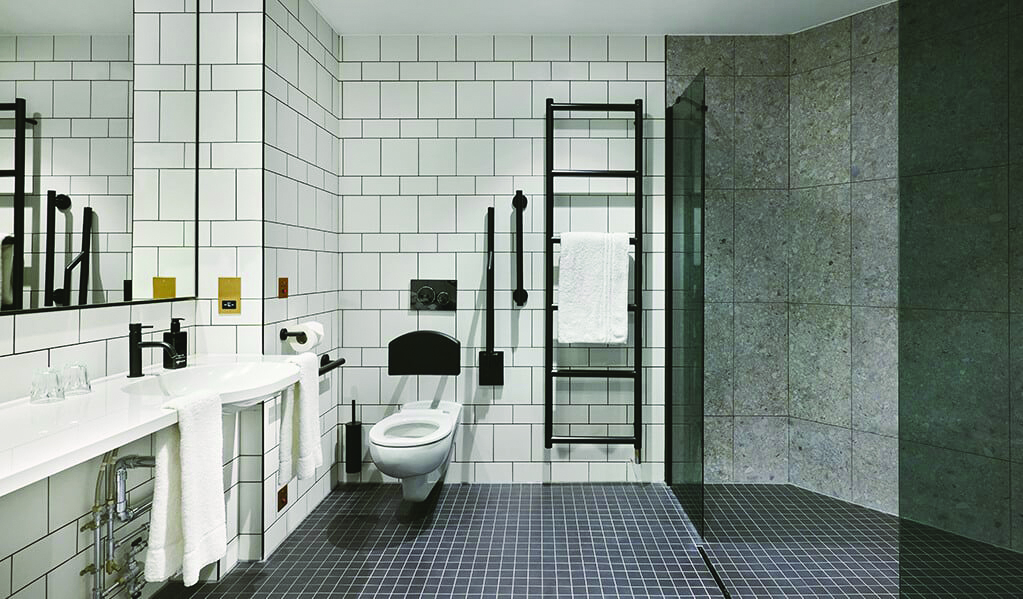
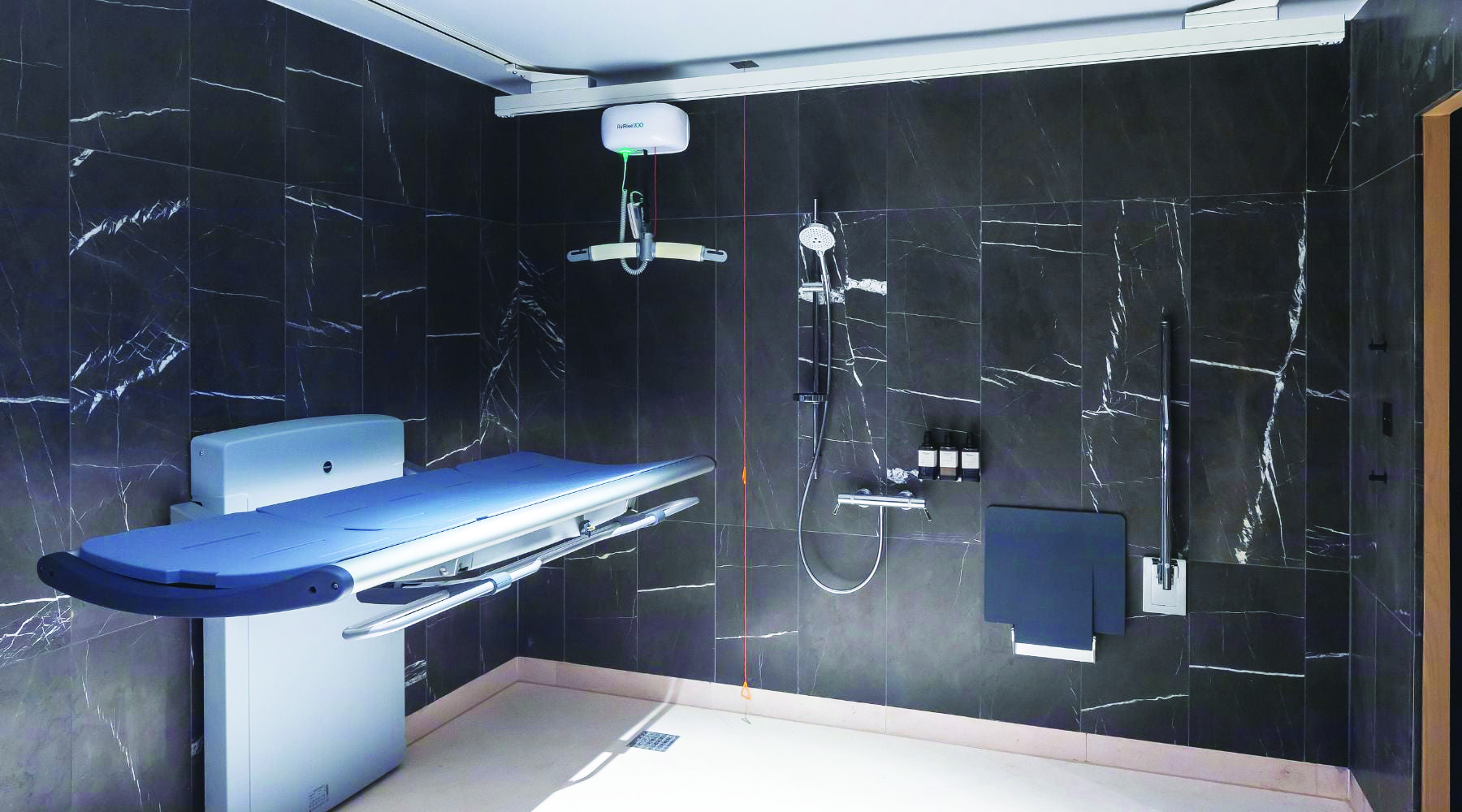
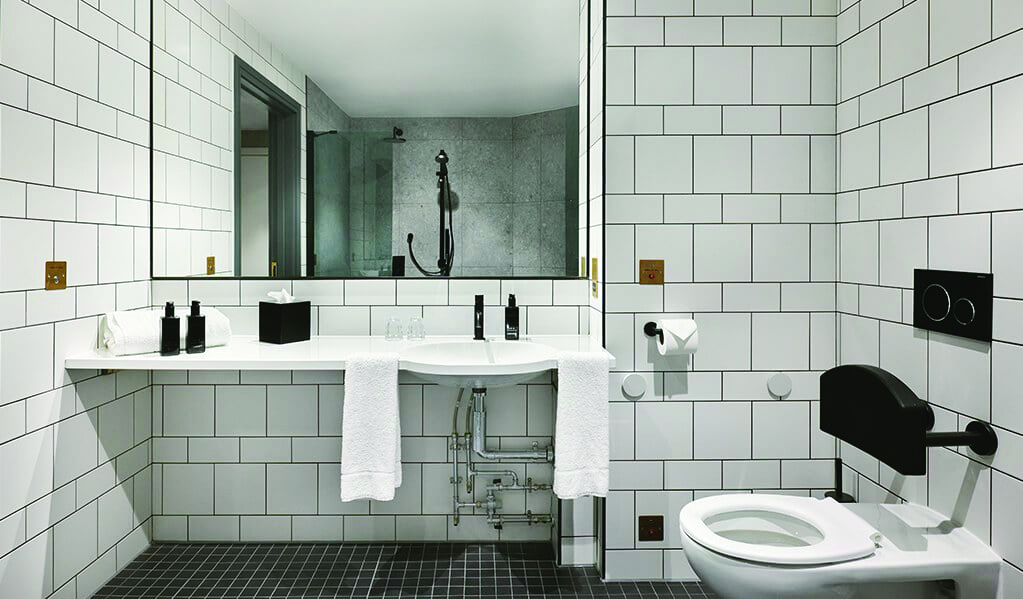
Almost 15 years later, Ed believes the industry has moved significantly closer to that original vision. Accessible bathroom products, for example, are increasingly available in finishes such as polished and aged brass, copper, chrome and matt black, allowing designers to integrate them into an overall interior scheme rather than treating them as purely functional additions.
“Why should the accessible bathroom be second best in its design, look and feel?” he asks.
The same philosophy extends beyond designated accessible guestrooms. For Ed, universal design principles can make spaces easier and more enjoyable for everyone, whether a guest has a permanent disability, a temporary injury, an age-related need or simply benefits from more generous circulation space.
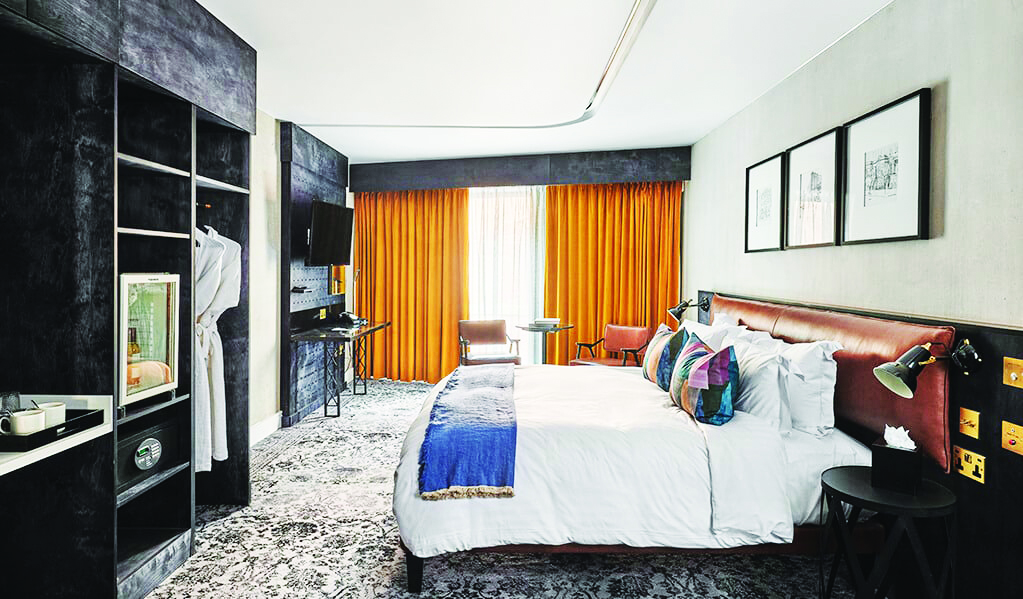
He points to the White Horse Inn, a 17th-century coaching inn in Surrey, where Motionspot helped design two wheelchair-accessible rooms. When they were not being occupied by disabled guests, Ed says the rooms proved popular with business travellers, tourists with large suitcases and families, with interconnecting rooms originally designed to accommodate carer access providing additional flexibility.
“If you get the design right for accessibility, you’re just designing better for everybody,” he says.
There can also be a compelling commercial argument. At a 189-bedroom hotel in Manchester, originally Hotel Brooklyn and now rebranded as Hotel Voco, Motionspot worked on 18 wheelchair-accessible guestrooms and bathrooms. According to Ed, a study conducted a year later found those rooms were the most profitable, delivering an additional £217,000 in net profit compared with the non-accessible rooms.
“If you think about it early enough in the design process, it doesn’t have to cost any more and you don’t have to pay for expensive retrofits when things go wrong in the future,” he explains. “By making your environment more accessible and inclusive, you’re opening up a much larger customer group.”
Early engagement is therefore crucial. Motionspot works both with existing properties, auditing buildings to identify successful accessibility features and potential barriers, and on new-build and major refurbishment projects. For the latter, Ed advocates bringing accessibility expertise into the process from RIBA Stage 2, when layouts and floorplans are being established, and continuing through Stages 3 and 4 as designers begin specifying products and materials.
Recommendations can encompass everything from product and material choices to colour, acoustics and circulation. Rather than prescribing particular products, Motionspot works alongside interior designers and reviews specifications within the context of their creative vision.
The aim is not to constrain design, but to identify opportunities to make it more inclusive. In bathrooms, for example, Ed highlights removable accessibility products that allow grab rails or shower seats to be installed when required. Rather than permanently surrounding guests with equipment they may not need, hotels can make appropriate support part of their service.
Physical access, however, represents only one part of the conversation.
“The more nuanced recommendations tend to be more focused around design for sensory and cognitive conditions,” Ed explains.
 Colour contrast can help partially sighted guests understand the boundaries between floors and walls, while patterns require careful consideration for neurodivergent guests. Repeating geometric patterns, in particular, can be challenging for some people.
That does not mean eliminating pattern. “We’re not saying don’t use pattern,” Ed stresses, “but use pattern in the right places, in the right way.”
Acoustics are another major consideration. Poor acoustic environments can present particular challenges for deaf and hard-of-hearing guests, but their impact extends much further.
“If acoustics are bad, it’s not just deaf and hard-of-hearing people that are going to struggle,” Ed says.
Natural materials, including timber, alongside planting and biophilic design can all play a role in softening the acoustic environment. These are interventions that can simultaneously enhance the overall atmosphere of a hospitality space – another example of accessible thinking contributing to the wider guest experience.
Wayfinding and signage can be equally important, particularly for guests who experience anxiety, disorientation or cognitive differences. Ed recalls a focus group participant explaining how communal toilets could be particularly challenging because cubicle doors and exit doors often appeared very similar, with no obvious signage identifying the way out.
Getting signage right might sound straightforward, but Ed regularly encounters examples where creative intent has overtaken usability. Font size and legibility, the use of sans serif typefaces, positioning and lighting all need consideration. Even the addition of Braille does not automatically make a sign accessible if it has been positioned at a height where people cannot reach it.
Lived experience has become an important part of Motionspot’s design process. Rather than simply researching different needs, the consultancy involves disabled people in engagement sessions throughout projects, presenting recommendations and inviting participants to challenge and develop them.
Those conversations need to be carefully managed. “One person with one condition does not represent all people with that same condition,” Ed points out. Motionspot therefore works with specialist engagement leads to make the sessions themselves accessible, ensure different voices are heard and bring a broader range of perspectives into the design process.
Ultimately, designing beyond compliance means moving away from accessibility as a checklist undertaken at the end of a project and towards an understanding of inclusivity as an integral part of good design.
There are also changes hospitality businesses can make immediately. Ed identifies getting signage right, ensuring the route into a property is physically accessible and auditing existing hotels as straightforward starting points. Speaking directly to guests about their needs and experiences can reveal barriers that might otherwise be overlooked, while staff training is equally important. Giving employees the confidence to talk to guests about what they need on arrival can help ensure their stay is as comfortable as possible.
For meaningful industry-wide change, however, individual projects will only go so far. Ed would like to see the major hotel groups become more actively involved and adopt accessible and inclusive design practices across their portfolios.
“There needs to be a concerted effort across the industry to ensure change is possible within accessible and inclusive design,” he says.
It brings the conversation back to the principle that first caught Hospitality Interiors’ attention in Motionspot’s work: designing beyond compliance. Rather than asking how a hospitality space can meet the minimum accessibility requirement, the more valuable question may be how inclusive thinking can make that space work better for everyone.
For Ed, the answer lies in considering accessibility early, listening to the people who will ultimately use the space and refusing to accept that function should come at the expense of beautiful design.