

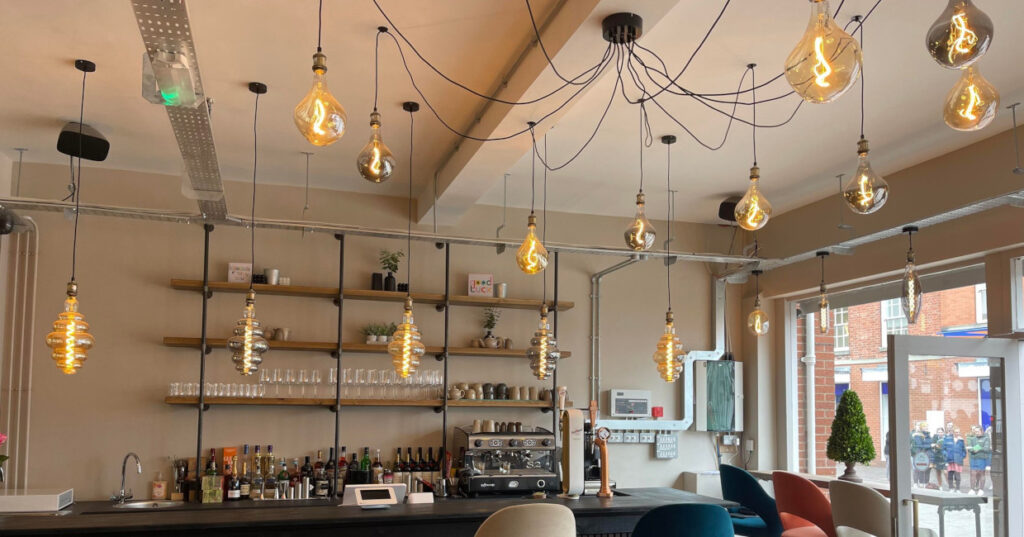

Lighting rarely receives the same attention as furniture, colour or materiality, yet it quietly influences how every interior feels. It can encourage guests to settle in, sharpen their focus or give a sense of occasion.
For hospitality businesses, those reactions matter. A carefully planned scheme supports a space’s purpose while influencing how people feel, often without their noticing.
Every Venue Needs an Atmosphere of Its Own
Successful interiors begin with a clear understanding of how guests should feel.
A neighbourhood café might aim for warmth and familiarity, inviting visitors to order another drink and stay awhile. Hotels require a different balance: restful enough to offer escape, yet sufficiently refined to feel special. Within gyms and fitness studios, brighter surroundings can assist with creating momentum, energy and focus.
Restaurants may need intimacy around each table, while bars often benefit from a more theatrical approach. Spas call for softness and calm. Although each concept differs, each setting needs an atmosphere that complements its identity and its guests’ expectations.
Colour Temperature Sets the Emotional Tone
Bulb tone has an immediate effect on a room’s character. Warm light, generally around 2200K to 3000K, can introduce amber or golden notes that sit comfortably alongside timber, textiles and earthy colours. It suits cafés, lounges, bedrooms and intimate dining spaces, where the aim is to create a relaxing environment.
Neutral white light can offer greater clarity without feeling overly clinical. It can work well in hotel bathrooms, reception areas or restaurant kitchens where visibility remains important.
Cooler white tones, often 4000K and above, appear crisper and may be more stimulating. Used thoughtfully, they can support energetic environments such as gyms, changing rooms and activity-led venues.
Colour temperature should respond to both finishes and function. A tone that flatters polished stone may drain warmth from dark wood or richly coloured upholstery, so samples should be reviewed within the finished setting.
Fixtures Can Give Light Its Physical Character
Choosing an appropriate bulb solves only part of the design challenge. Each light fitting also contributes shape, scale and personality.
The choice of lighting should respond to both the practical requirements and character of the space. Compact table lamps can create inviting pools of warm illumination across café counters or restaurant tables, while streamlined bulkhead fittings can provide practical brightness in energetic fitness environments. A chandelier, meanwhile, can establish a memorable focal point within a hotel lobby, dining room or spa reception.
Wall lights can also add rhythm along corridors while pendants can define a bar or communal table. Concealed strips bring depth to shelving and architectural details without competing for attention. Layering several sources usually produces a richer result than relying on a single central fixture, while dimming controls can also allow a venue to shift naturally from daytime service to evening service.
A Considered Scheme Leaves a Lasting Impression
Effective lighting connects mood, function and interior character. Colour temperature shapes emotional response, fixtures reinforce design language, and placement determines where attention falls.
When these elements work together, guests simply feel that they are in the right place. The space may feel more inviting, relaxing, or energising depending on the atmosphere the lighting creates.